Yoshida Fire Festival ~Shinto Ritual~

Let's learn about the rituals of the fire festival.

The Mount Fuji Fire Suppression Festival, which lasts for two days, includes many Shinto rituals, from the main shrine ceremony and the Suwa Shrine ceremony to the return procession.

I will explain in detail what will be happening.

Main Shrine Festival / Suwa Shrine Festival

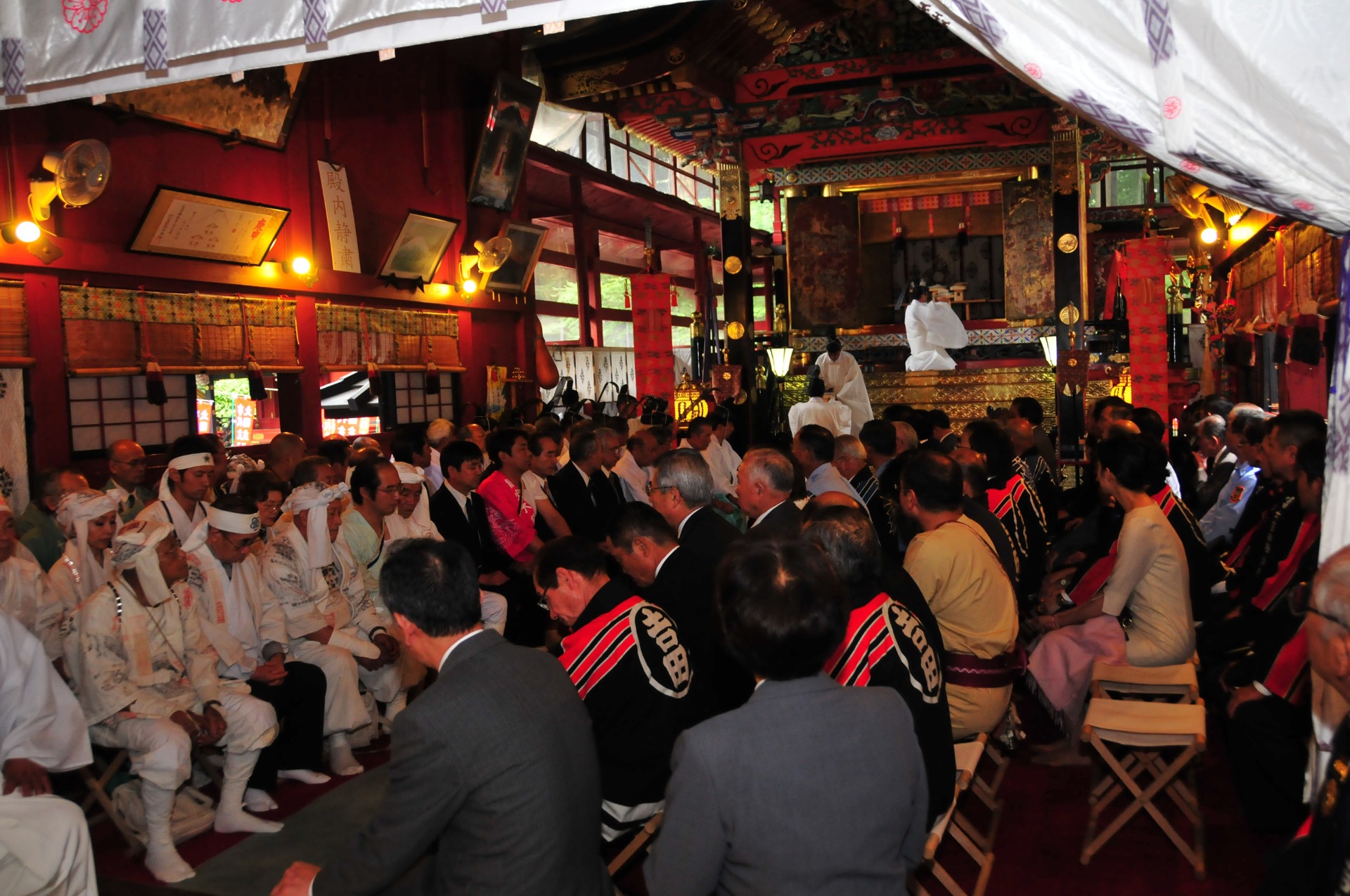
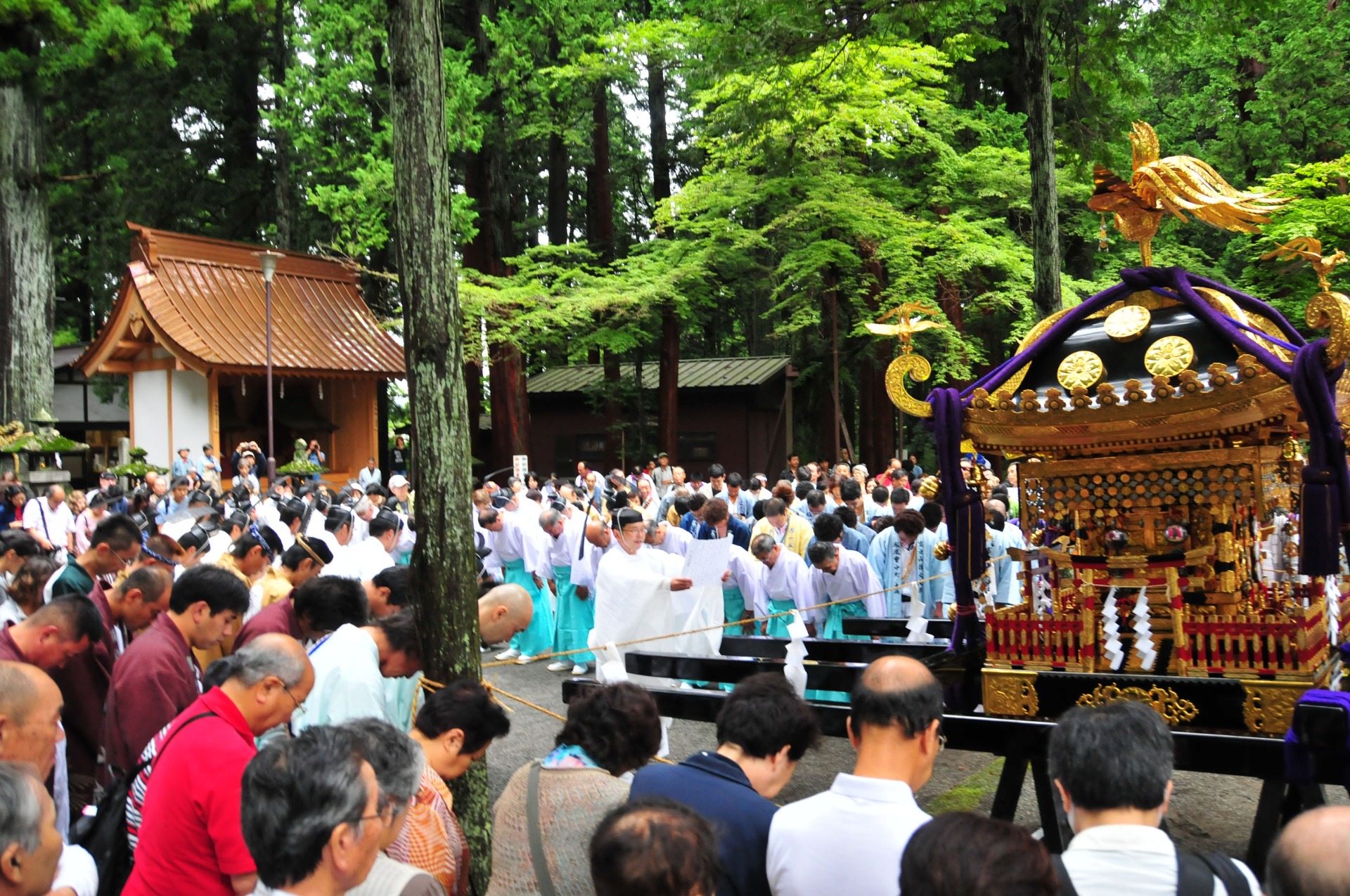
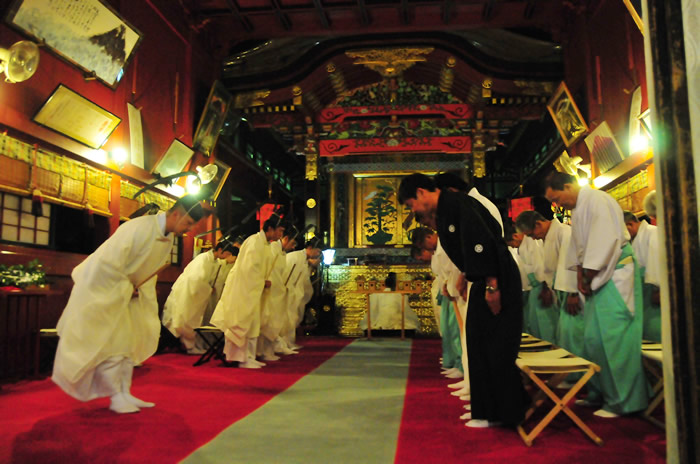
At the main hall of Asama Shrine, a ceremony will be held to pray for the transfer of the deity enshrined in the main hall to Suwa Shrine.

Approximately 100 people attend this Shinto ritual, including representatives of the parishioners, caretakers, members of the Fuji-ko (Fuji pilgrimage group), and the Oshidan (pilgrimage guides).

It will start around 3 PM on the 26th.

Godozasai (a festival to accompany the deity)

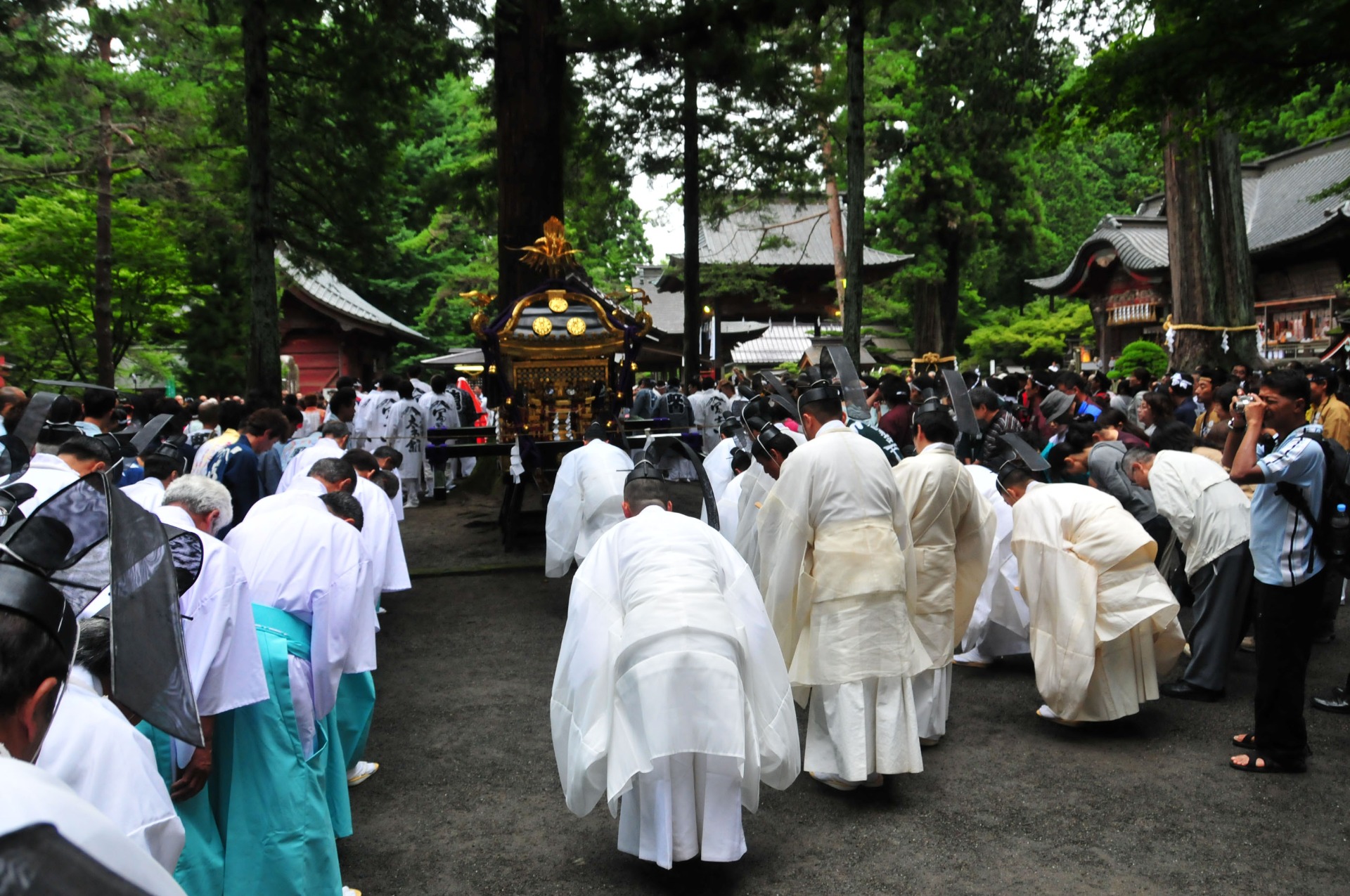
After the main shrine ceremony, a ritual is performed in which the deities of Asama Shrine and Suwa Shrine are transferred to portable shrines. This is called "Sengyo" (transfer of the deities).

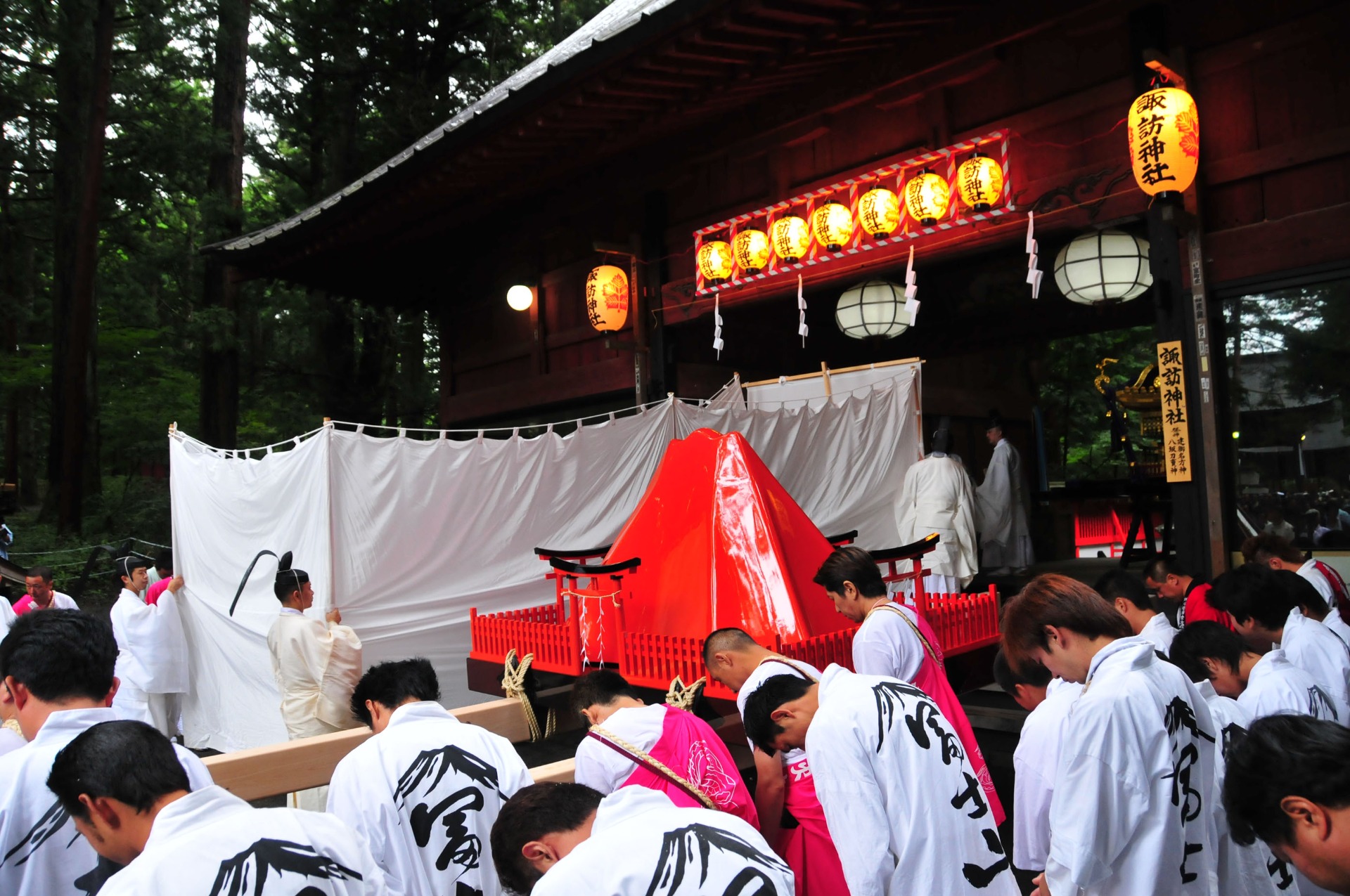
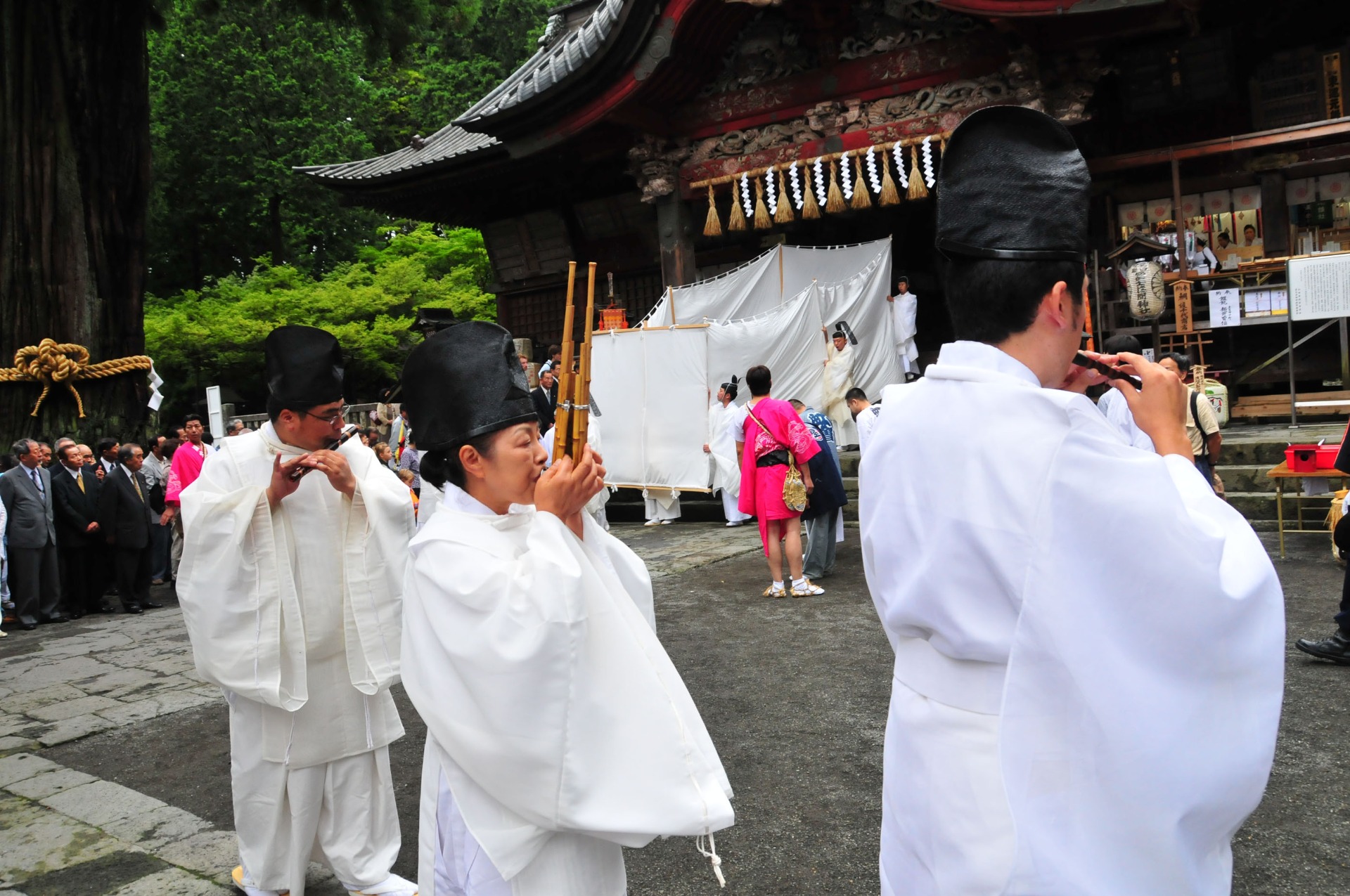
When moving the divine spirit from within the shrine, the lights are turned off to darken the surroundings. Then, to prevent the divine spirit from being seen by people, the Shinto priests cover the area with white cloth. This is called "kinugaki" (silk fence).

The procession begins with the divine spirit of Asama Shrine being concealed behind a silk screen and taken to the neighboring Suwa Shrine. There, another Shinto ritual is performed. After the ritual is complete, the chief priest conceals the divine spirits of both Asama Shrine and Suwa Shrine behind a silk screen and transfers them to the Myojin Mikoshi (portable shrine).

Hatsuyosai (Departure Ceremony)

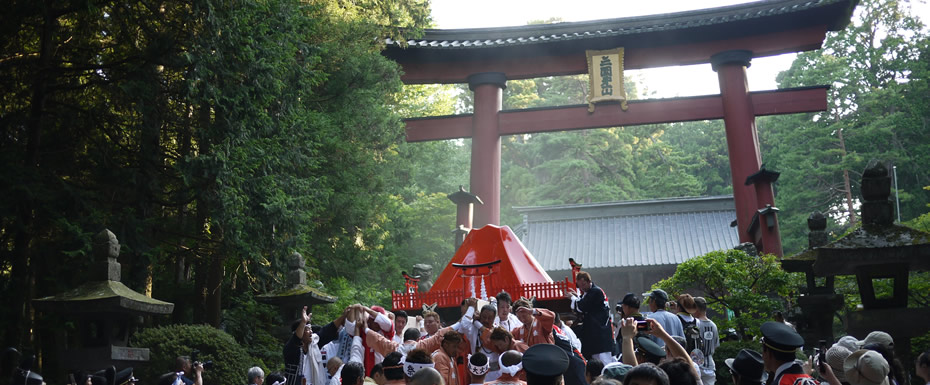
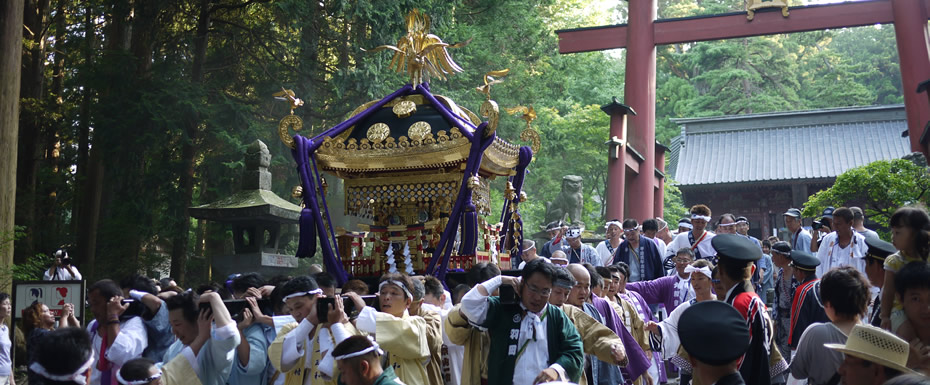
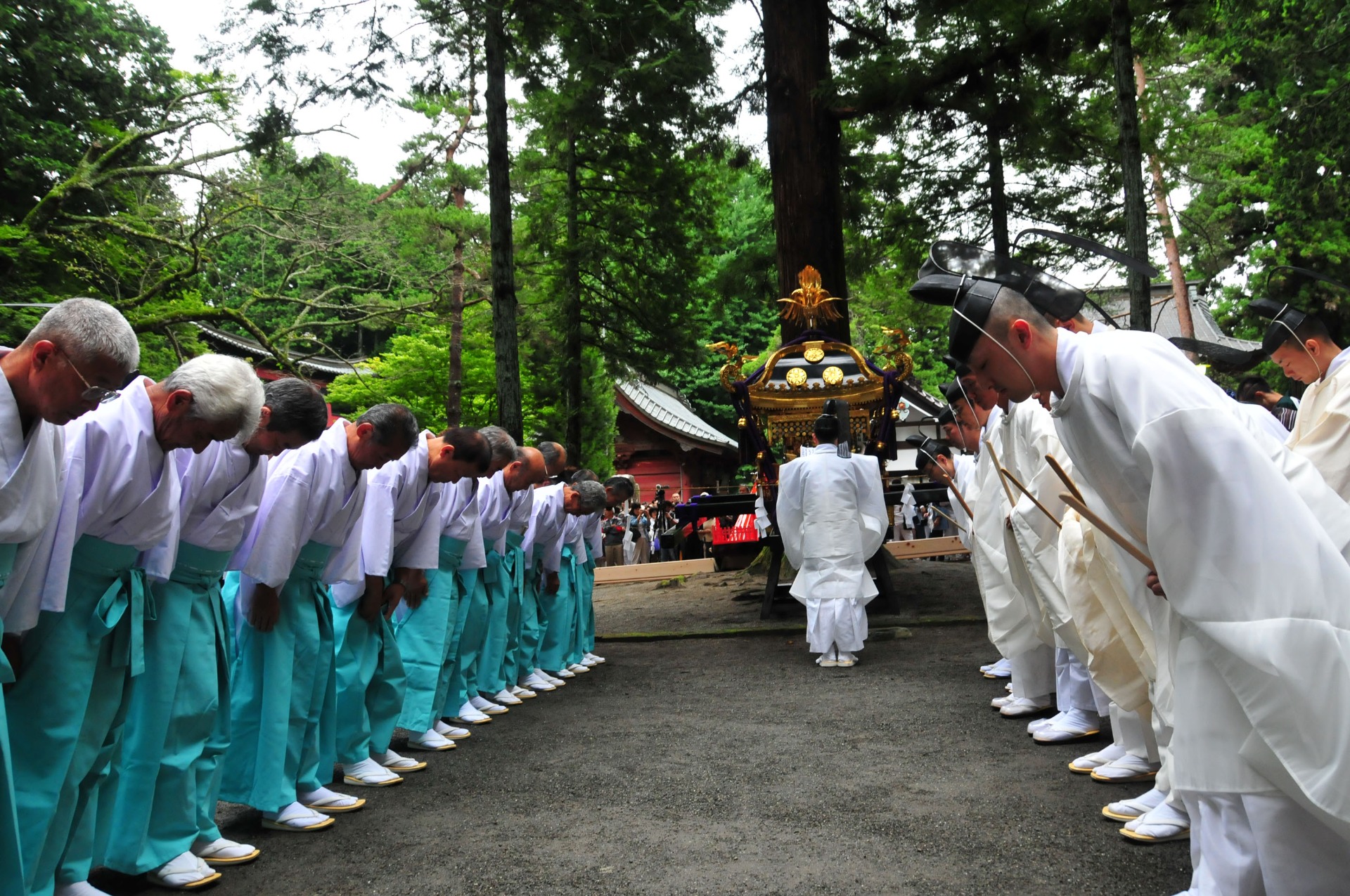
After the transfer ceremony is complete, the two portable shrines depart from in front of Suwa Shrine. The signal for departure is given by the organizers.

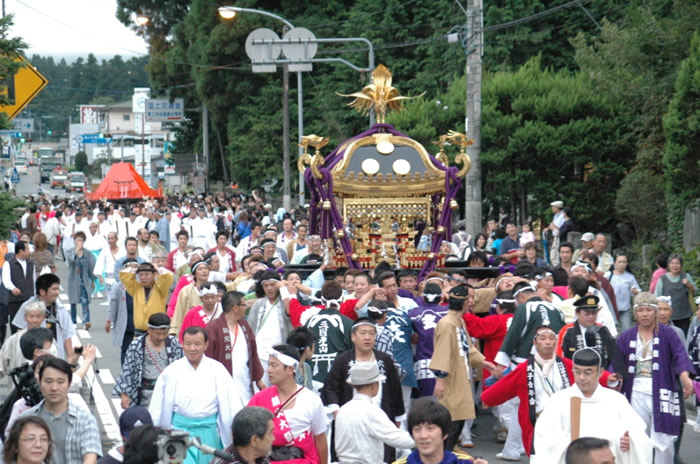
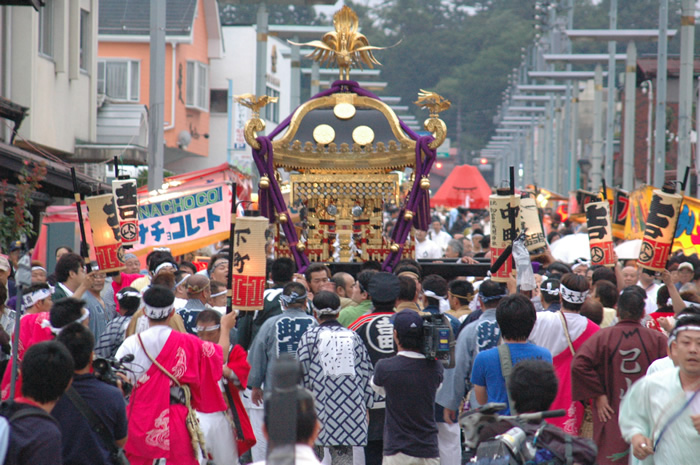
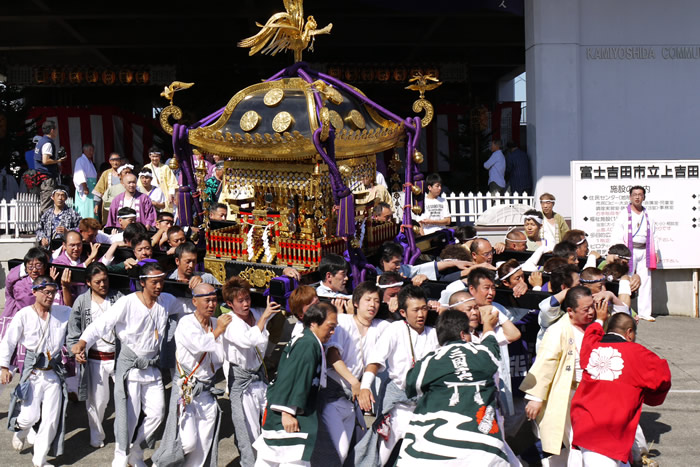
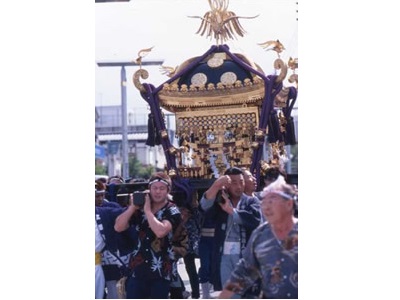
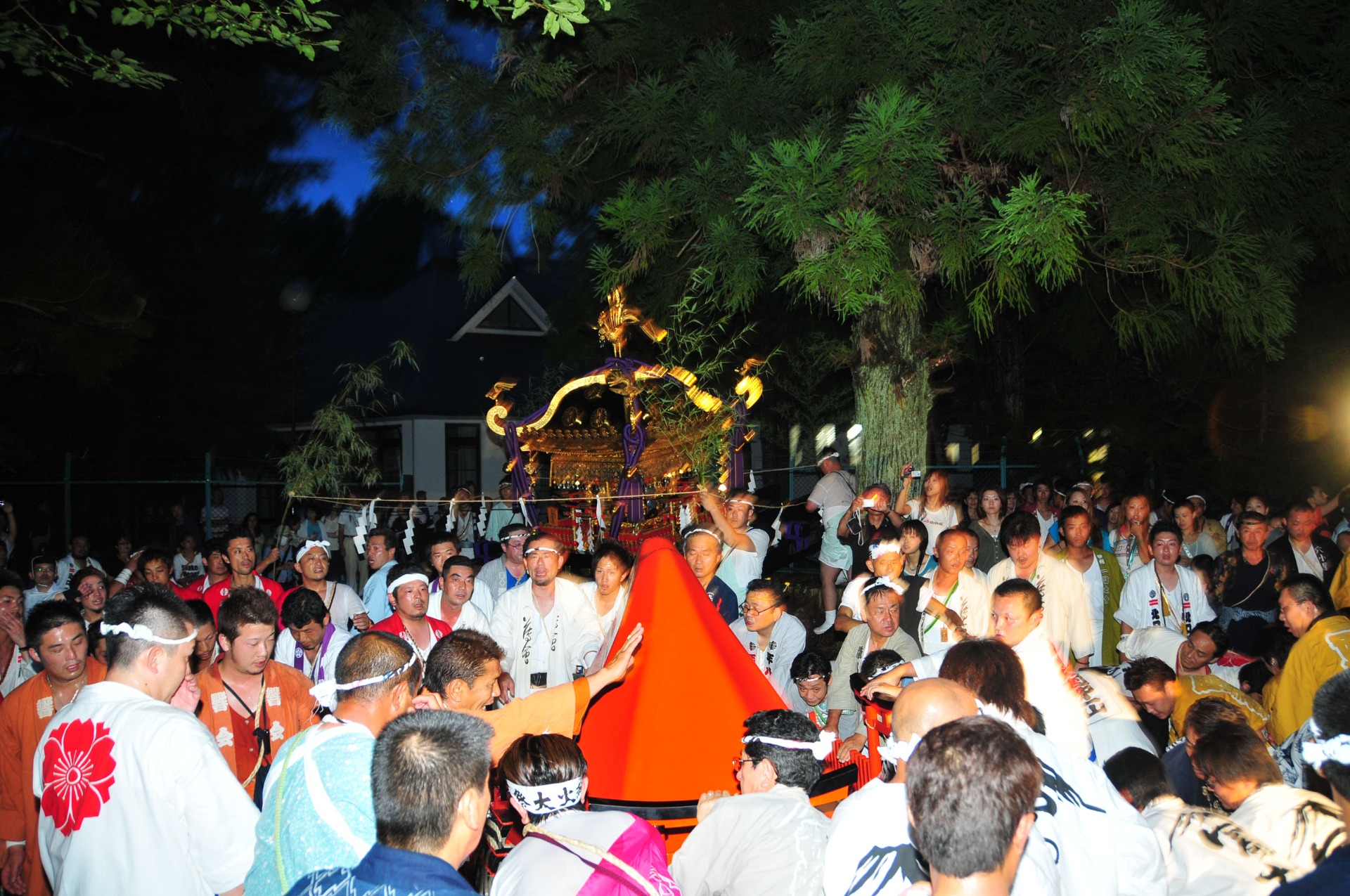
The Myojin Mikoshi (portable shrine) leads the procession, followed by the Oyama Mikoshi (portable shrine). Shortly after setting off, they stop at a plaza called Takamagahara, located directly in front of Suwa Shrine, where another departure ceremony is performed. After this, the procession officially departs.

It will take place around 4:45 PM on the 26th.

The procession of the portable shrine

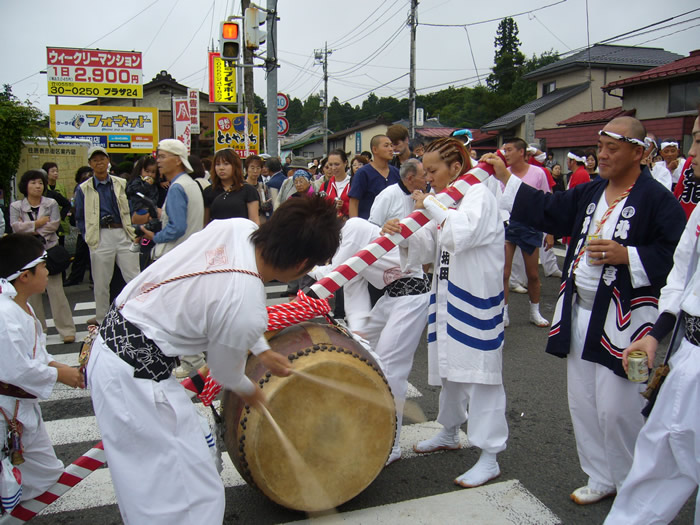
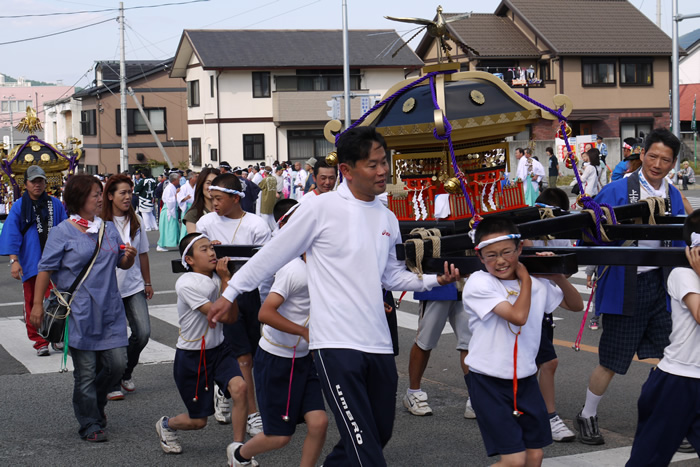
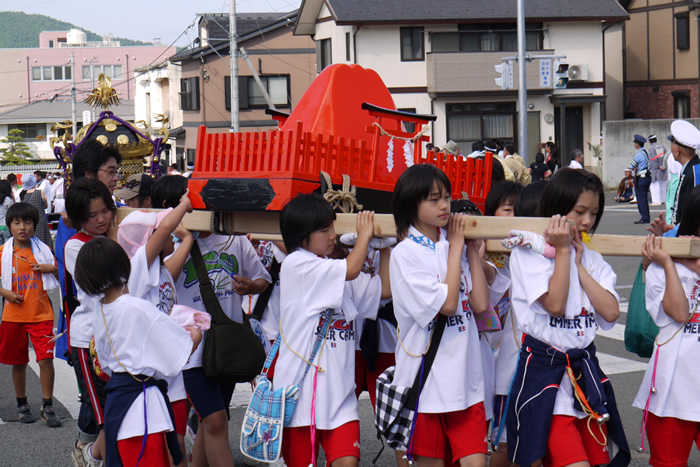
The procession will depart with the sasaki-dai (a type of wooden platform), drums, portable shrine, Fuji Mikage (a type of figurines of Mount Fuji), and participating parishioners all in attendance.

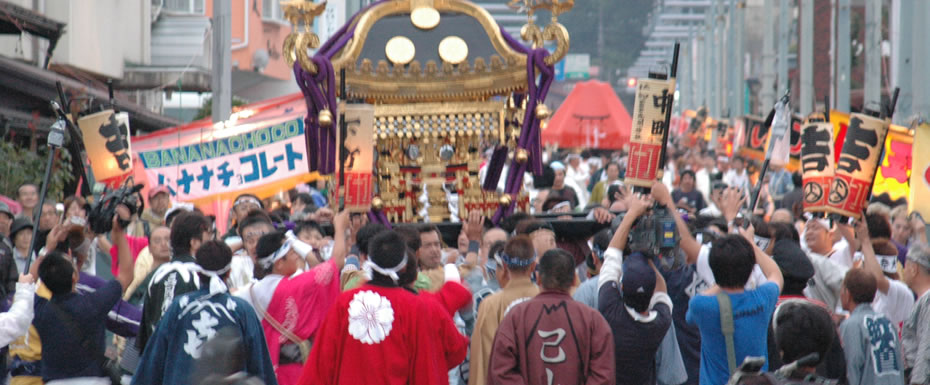
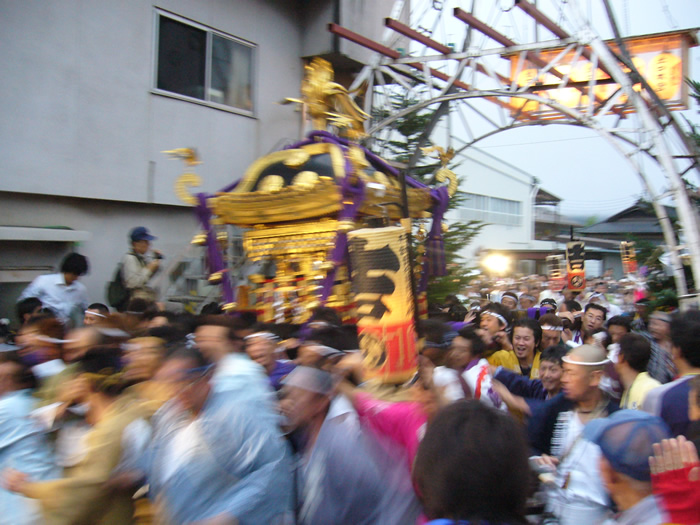
The portable shrines proceeding from the shrine always follow the order of Myojin Mikoshi followed by Oyama Mikoshi, and there is a rule that they must never overtake each other. When the Oyama Mikoshi stops to rest, it is customary to drop it to the ground three times with a loud thud, and it is characterized by being carried in a rough manner.

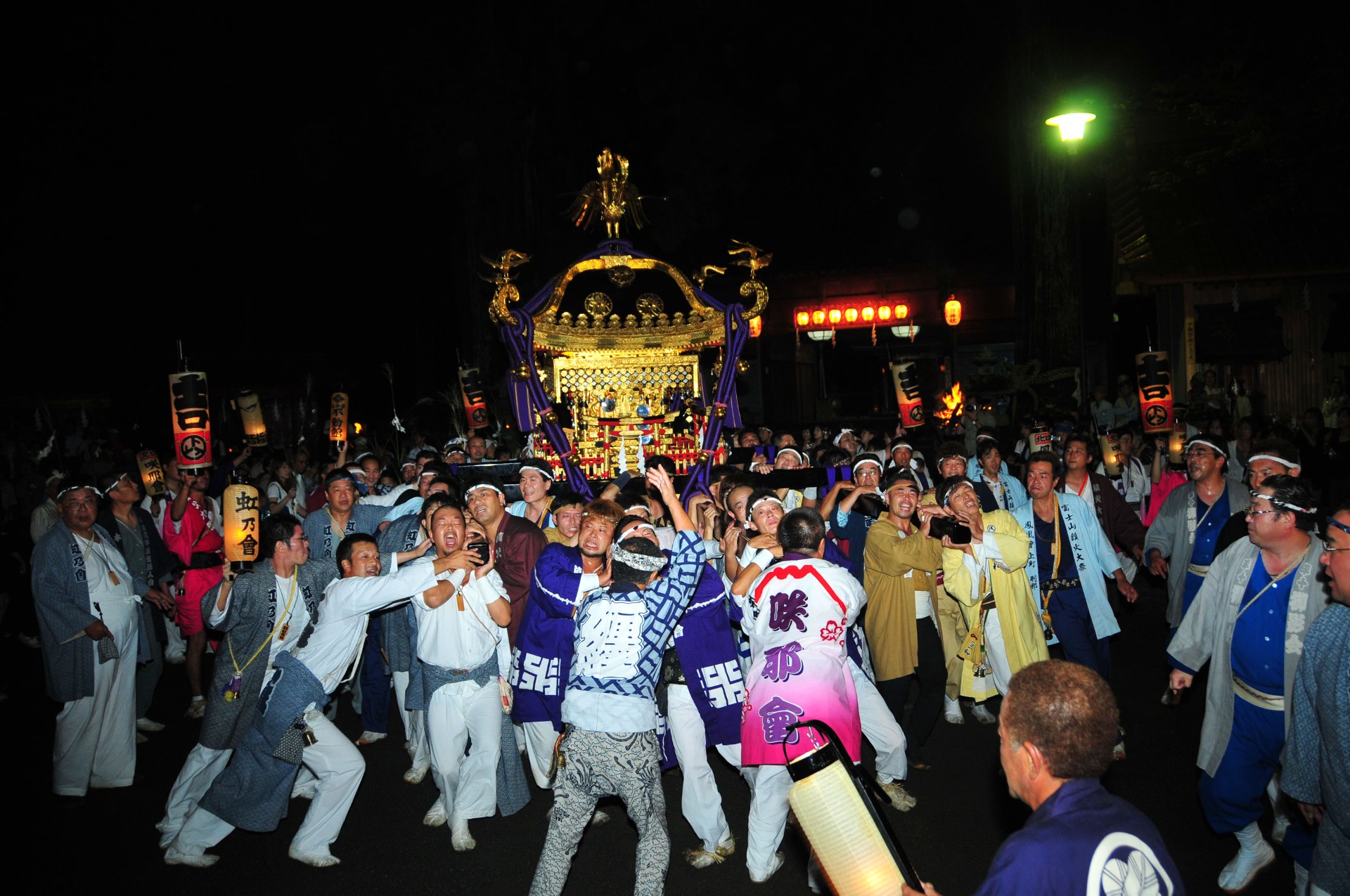
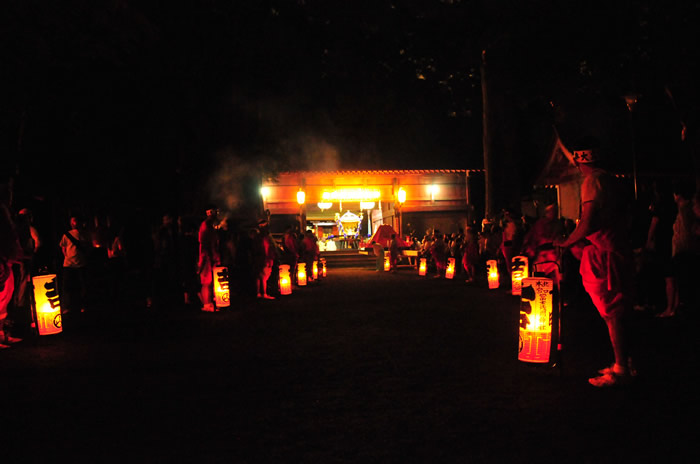
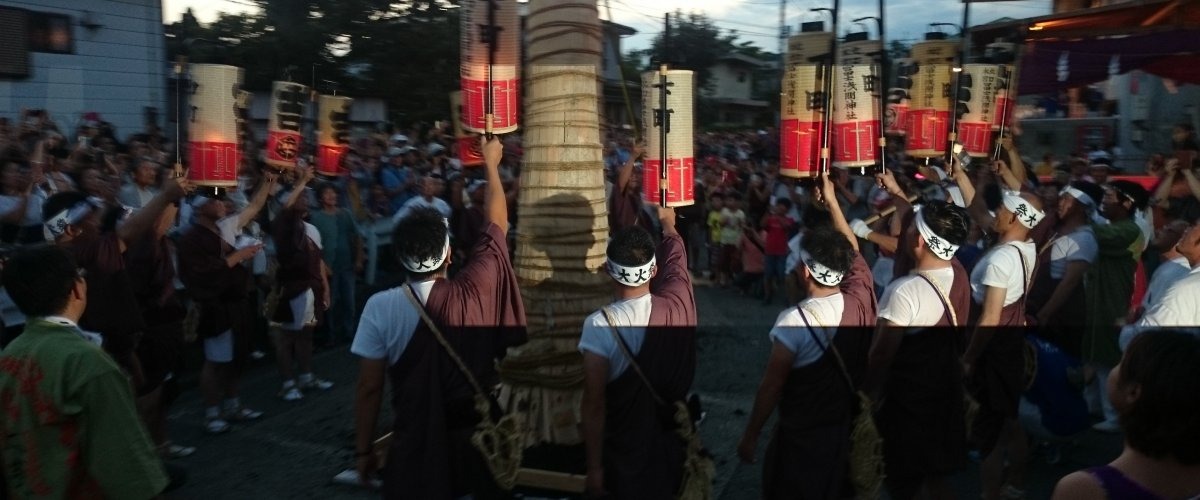
As the sun sets and darkness falls, the main street, illuminated by torches, is closed to traffic. The two portable shrines proceed slowly from the Kamijuku intersection, taking breaks along the way, towards the Kamiyoshida Community Center, where the temporary shrine is located.

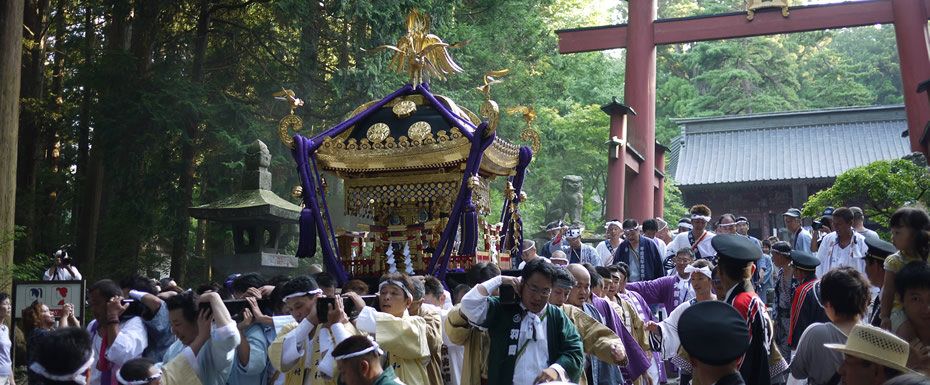
Otabisho Chakuyosai (arrival ceremony at the temporary shrine), torchlighting.

We will arrive at the temporary shrine around 6:30 PM.

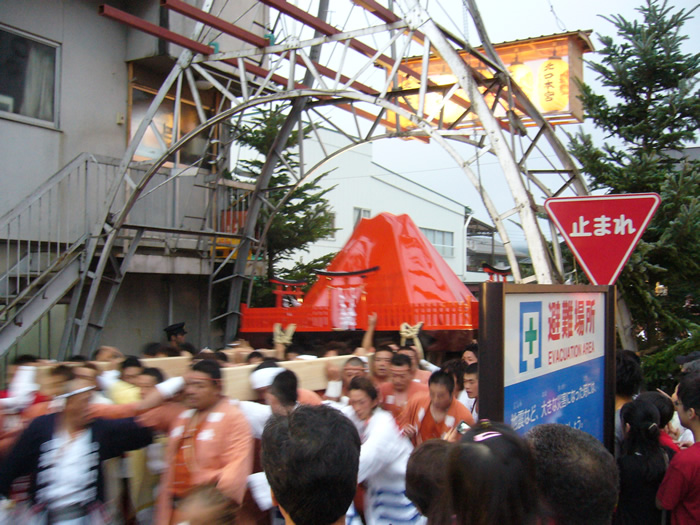
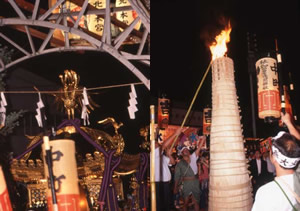
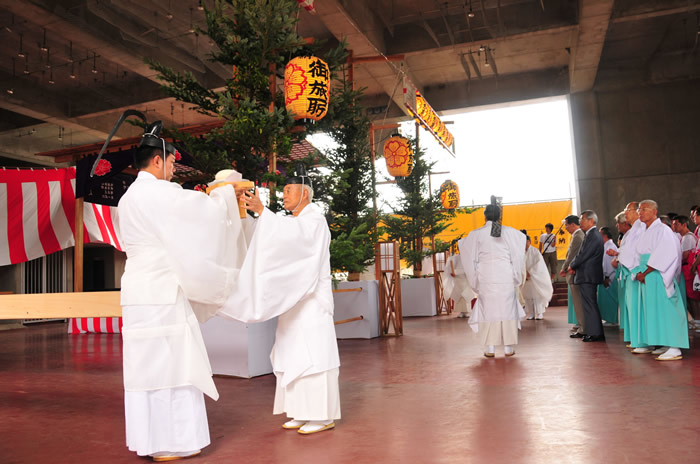
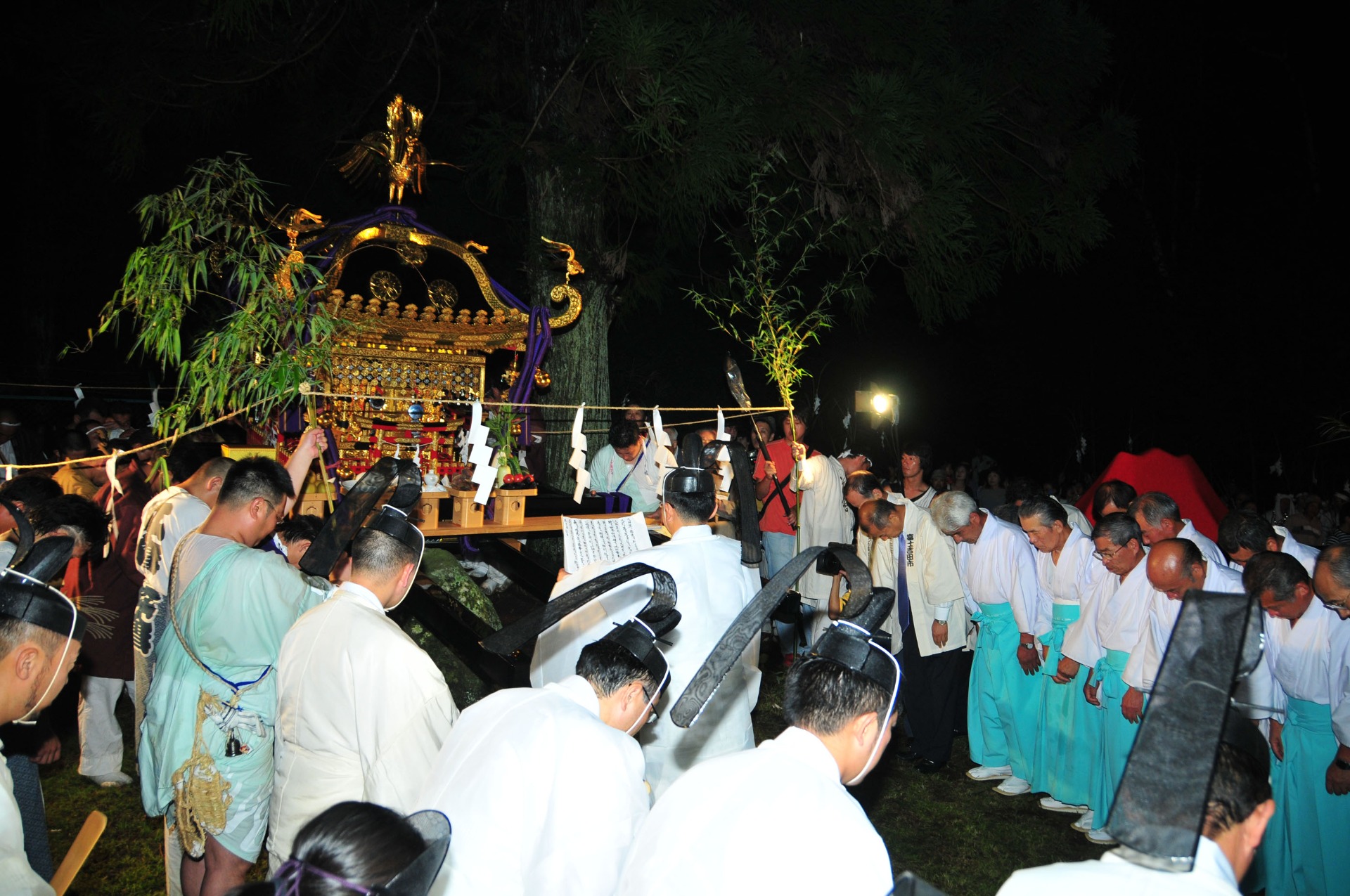
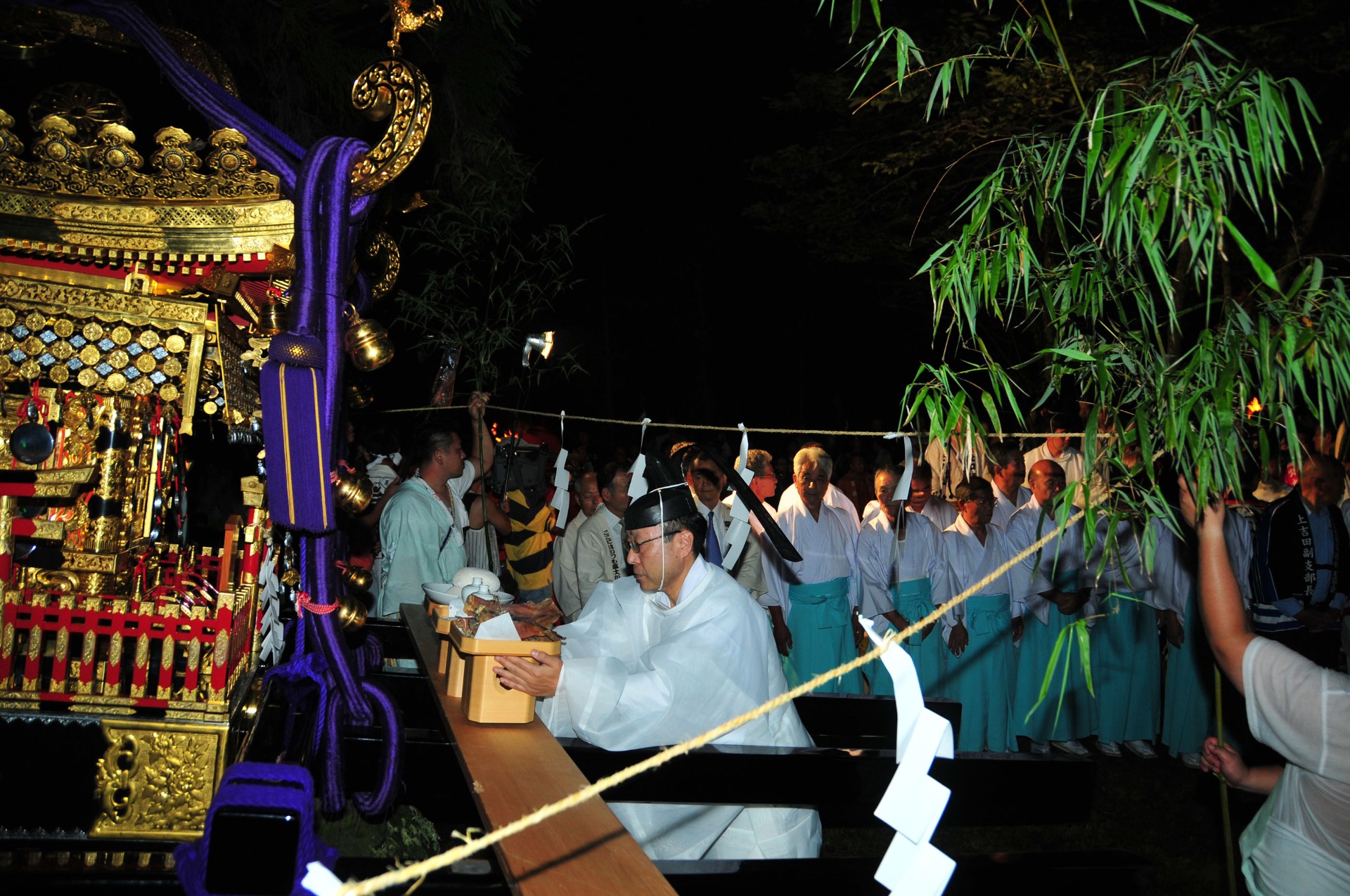
The sacred rope (shimenawa) stretched around the sacred tree of the fire lookout tower is cut by the beak of the phoenix standing on the roof of the Myojin portable shrine, and then the procession enters. Upon arrival, the Chakkoshi-sai (arrival ceremony) is held.

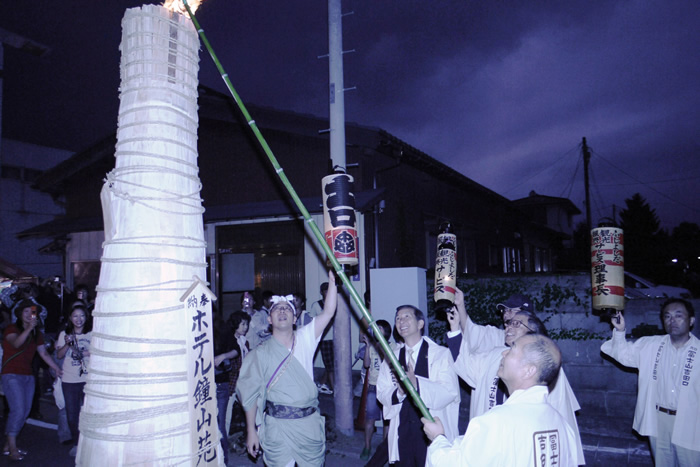
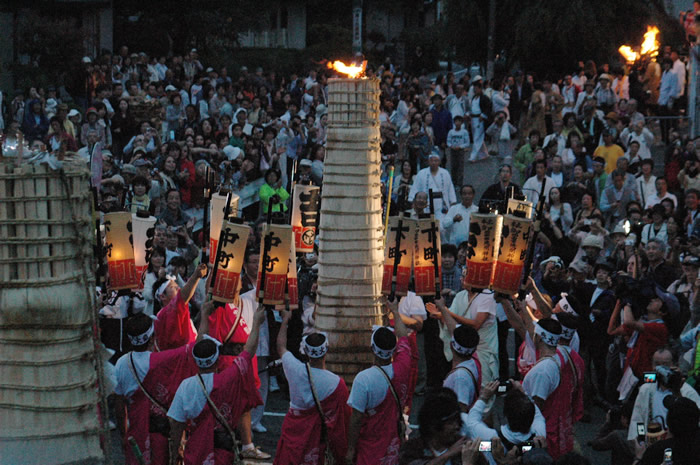
As soon as the portable shrine arrives at the temporary shrine, the organizers light a large 11-foot torch in front of the shrine. After that, the organizers set up all the torches along the street and light them. Torches piled up at each house are also lit. In this way, a band of fire appears stretching north and south, mainly along the main street of Kami-Yoshida.

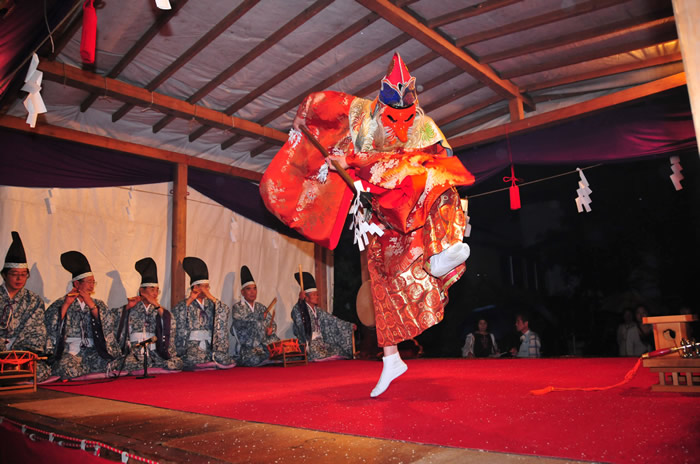
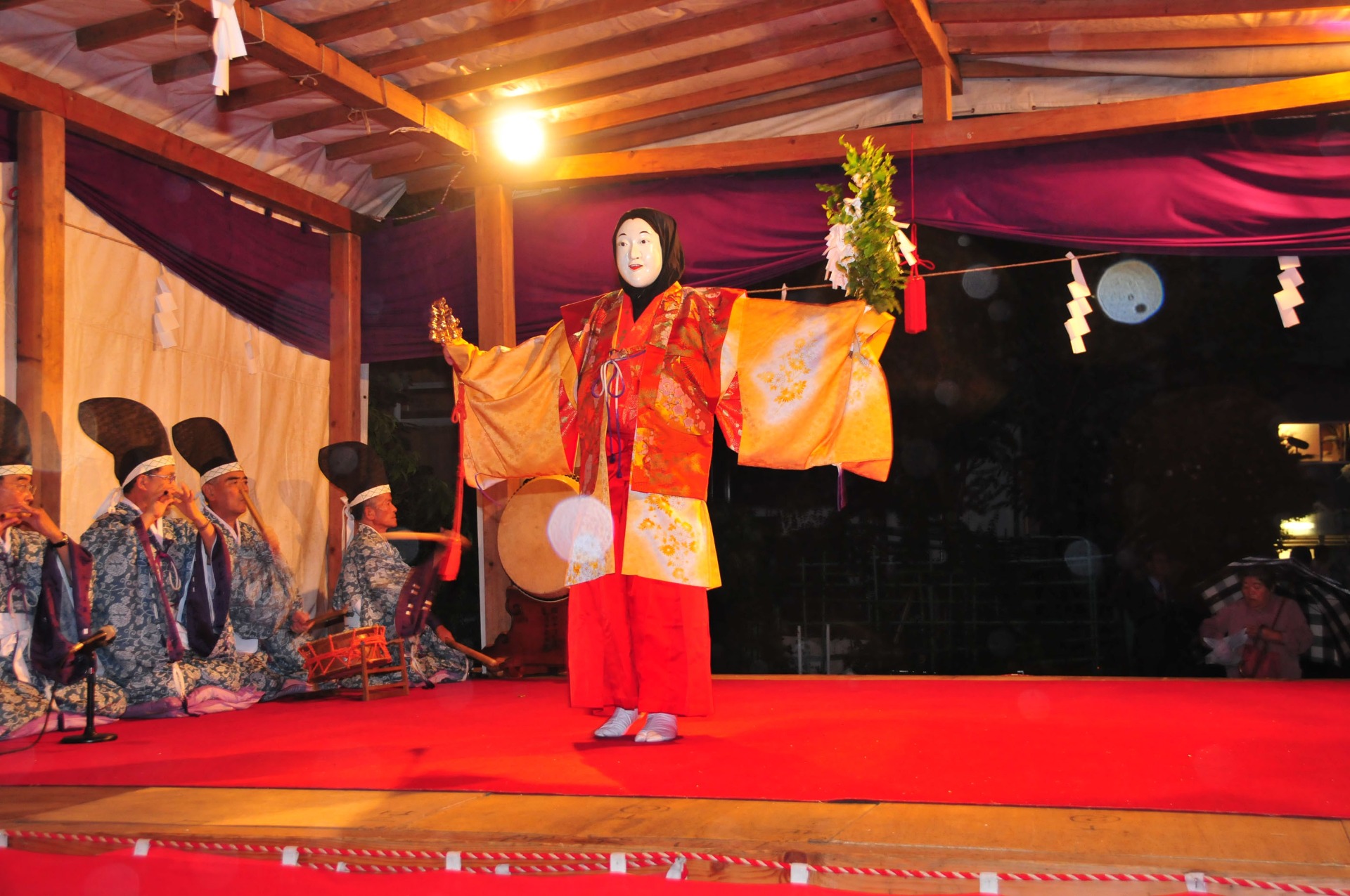
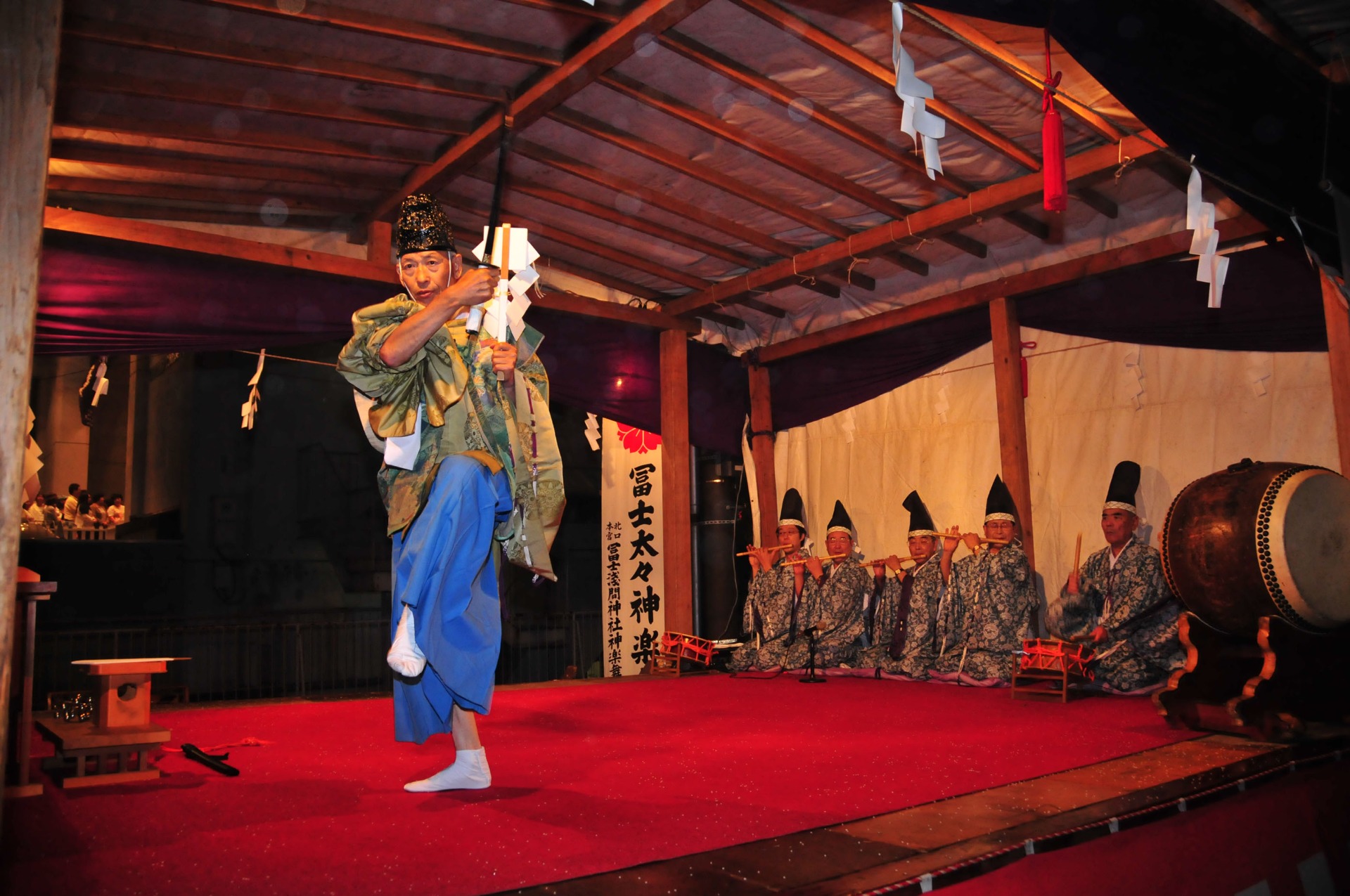
To celebrate the safe arrival of the portable shrine at the temporary shrine, a Taidai Kagura dance is performed in the Kagura Hall built next to it.

Taidai Kagura

As soon as the portable shrine arrives, the Fuji Sengen Shrine Taidai Kagura Association begins performing the Taidai Kagura dance. This dance, called "Mukae Kagura" (welcoming dance) to welcome the arrival of the gods, continues until around 9:30 p.m.

Otabisho Hatsuyosai (Departure Ceremony from the Temporary Shrine)

At 2 p.m. on the 27th, the Shinto ritual for the departure of the portable shrine from the temporary shrine will be held in front of the large mikoshi (portable shrine) and Mikage, which have been enshrined overnight, marking the start of the mikoshi procession for the day.

The two portable shrines are carried again, and after taking breaks along the way, they head towards the Golden Torii gate around 3:30 p.m.

Kanadorii Festival

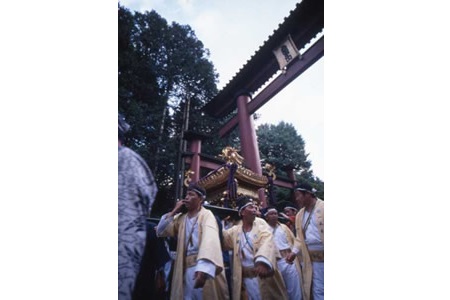
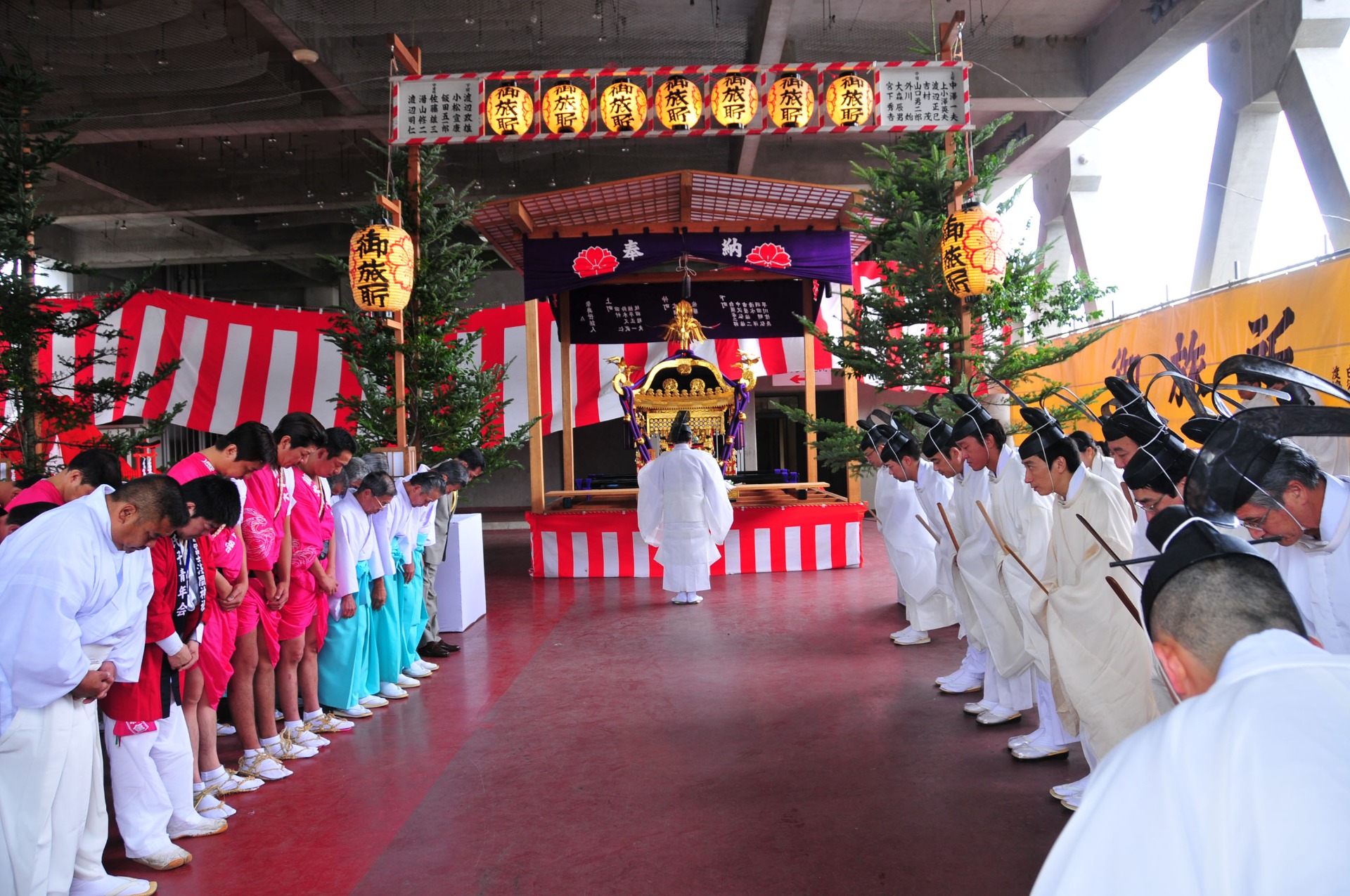
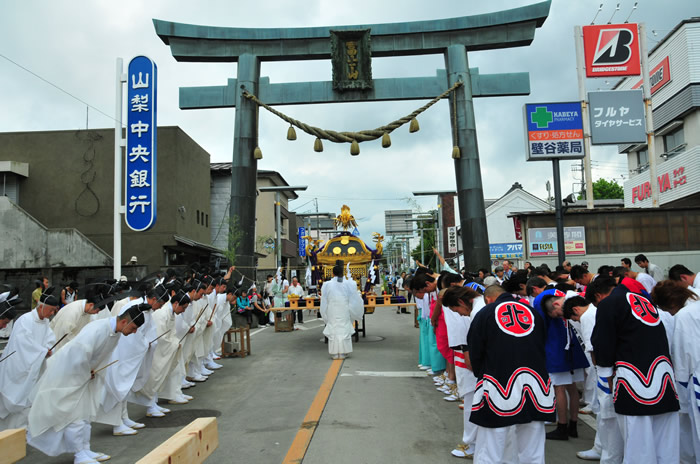
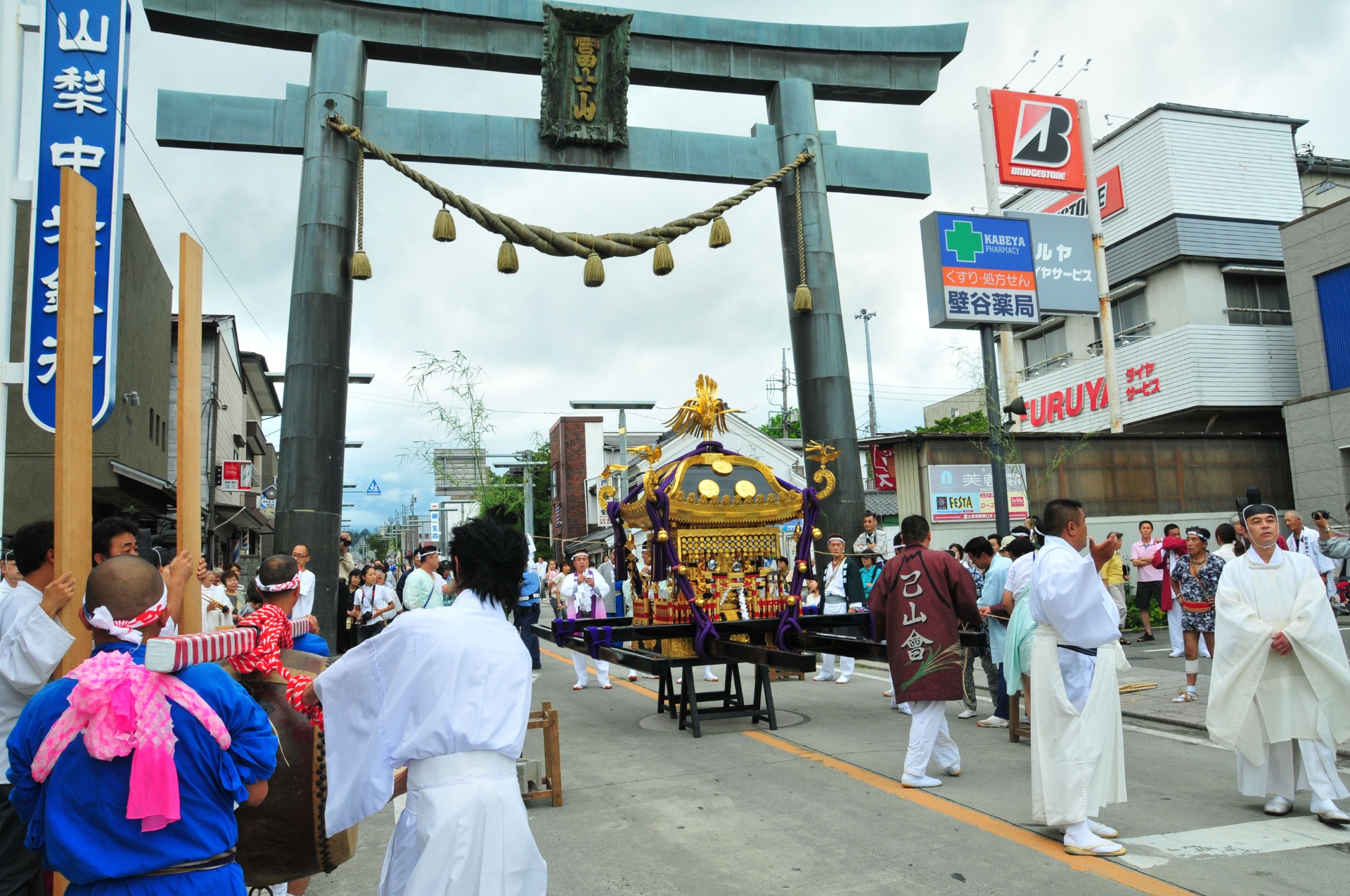
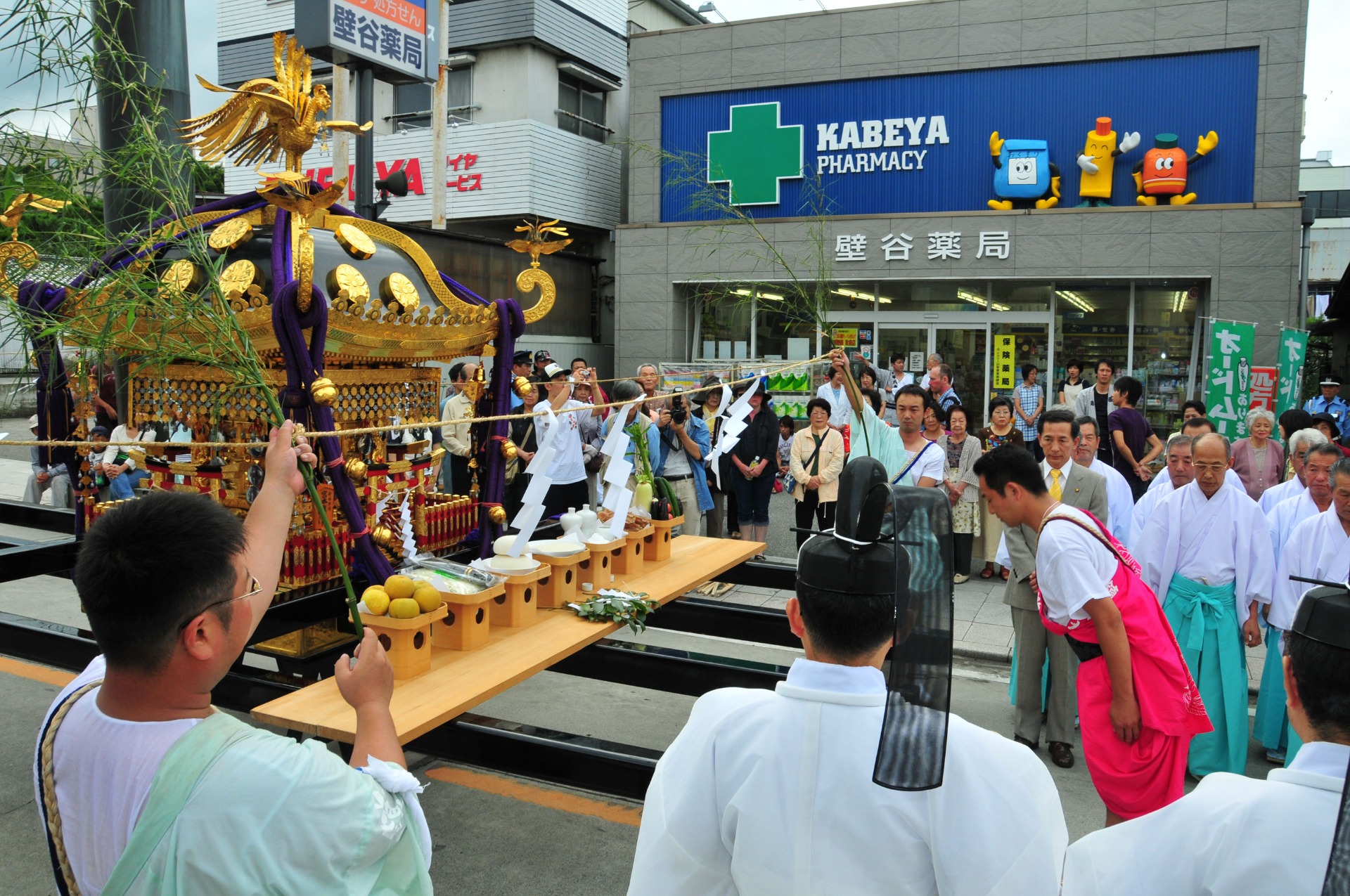
At 3 PM, the Kin Torii Festival takes place. The Myojin portable shrine is placed right next to the Kin Torii gate, in the middle of the street, surrounded by a sacred rope (shimenawa).

The portable shrine is placed in the middle of the Kin-Torii intersection. After the rituals here, the shrine begins its return journey.

The procession of the portable shrine

After the Kin Torii Festival ends, the portable shrines split into two groups. The Myojin portable shrine proceeds east from the Kin Torii intersection before turning back, while the Oyama portable shrine proceeds west, passing in front of Fujisan Station.

The two portable shrines will meet at Kin Torii Park around 4:30 pm and proceed towards Asama Shrine. Along the way, as they pass near Sainenji Temple, the head priest of Sainenji Temple will chant sutras as he sees off the shrines, just as he did the previous day.

When the portable shrine reaches the Kamijuku intersection, it takes a long rest. After that, only the Myojin portable shrine proceeds westward and then returns to rest.

Omikuraishi Festival

The two portable shrines near the Kamijuku intersection begin moving all at once around 6:20 p.m. Instead of heading directly to the shrine, the shrines aim for a place where there is a large, sacred stone called "Omikuraishi."

This stone is said to be the site of an old shrine where the deity of Suwa was worshipped in the past.

The Myojin portable shrine, upon arrival, is placed on this stone facing east, with a sacred rope (shimenawa) stretched around it. The Oyama portable shrine is placed on the ground next to the Okusuri stone, also facing east.

Once this ritual is finished, we will finally head to Asama Shrine.

Agematsu Shinto Ritual

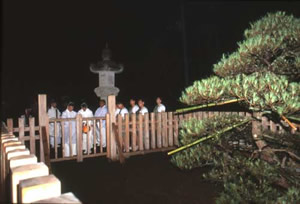
After the Shinto ritual at Mikuraishi is completed, a chant is recited in front of a pine tree on the west side of Asama Shrine.

The two portable shrines return to the shrine as soon as the chanting is finished. Because there is some distance between the sacred saddle stone and the pine tree, the attendants carefully watch to make sure they don't miss the signal when the lanterns that are brought out and waved from side to side are released at the end of the chanting.
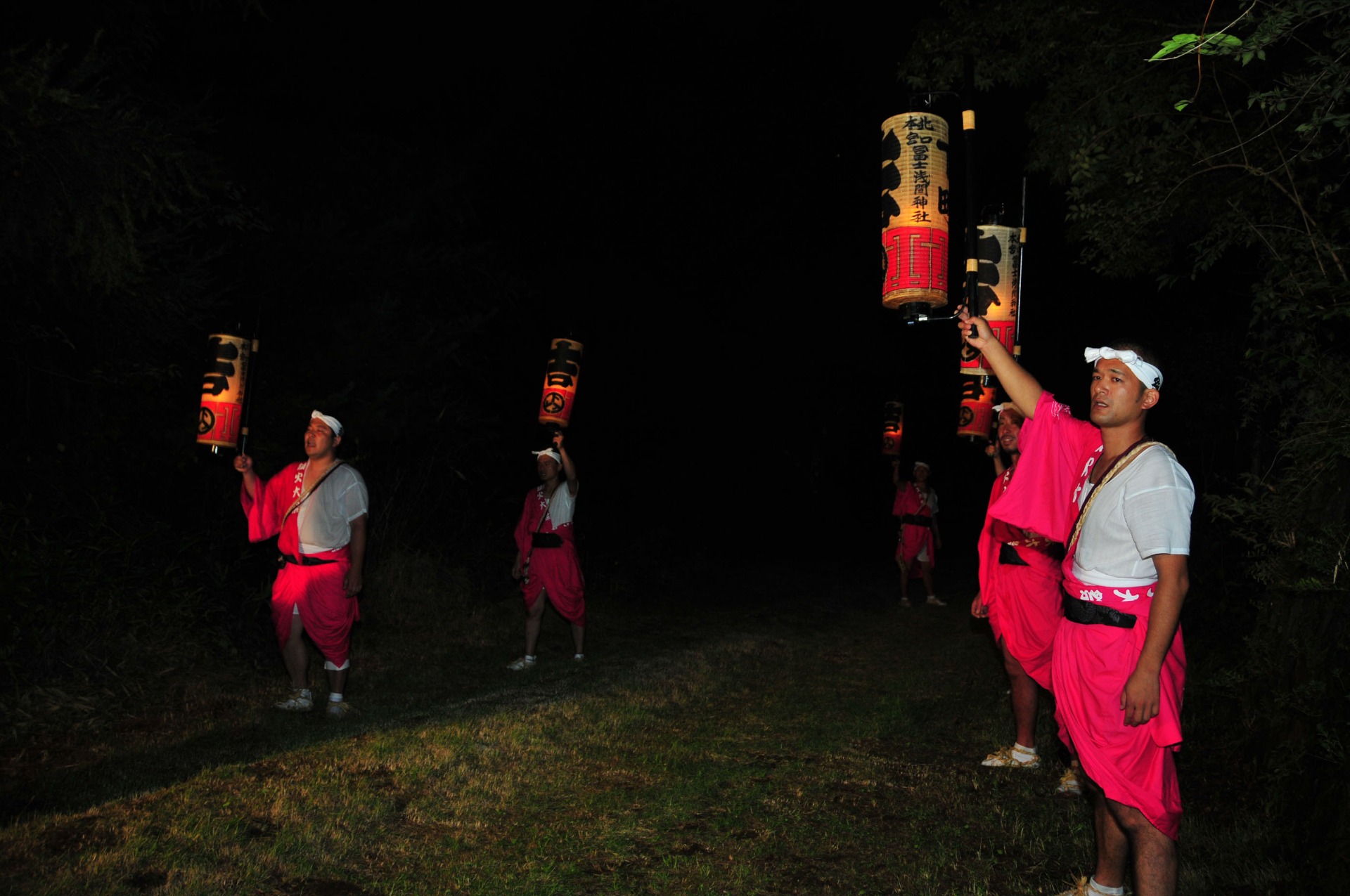
Upon receiving the signal, the Myojin Mikoshi (portable shrine) enters the shrine grounds, followed by the Oyama Mikoshi (portable shrine).

Takamagahara Festival

First, the Myojin Mikoshi (portable shrine) flows vigorously into the grounds of Asama Shrine and circles Takamagahara (the realm of the gods) seven times.

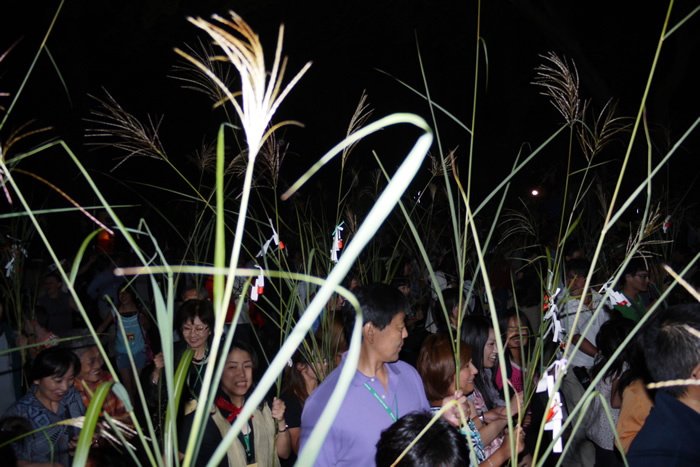
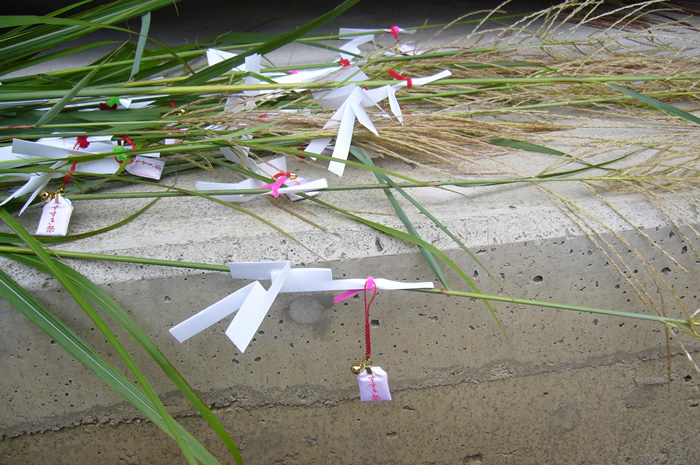
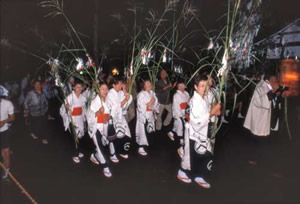
In the third week, the Oyama Mikoshi (portable shrine) joins the procession. Following the mikoshi, parishioners and worshippers carrying tamagushi (sacred branches) made of pampas grass circle around Takamagahara.

Many women participate in this festival (also known as the Susuki Festival). There is a reason for this; it is said that women participate as a substitute because they are not allowed to carry the portable shrine. It is also said that they participate to receive blessings for safe childbirth and successful child-rearing.

Kankōsai (return procession)

After the procession is complete, the two portable shrines are placed in Takamagahara. The men who carried the shrines all leave them at once.

Then, the surrounding lights are turned off, and the portable shrine is surrounded by a silk fence, and the "Sengyo" ceremony takes place, in which the divine spirit is returned from the portable shrine to the main shrine. The divine spirit of Suwa Shrine is transferred first.

Next, the divine spirit of Asama Shrine is transferred. Once this transfer ceremony is complete and the divine spirit returns to the shrine, the fire festival comes to an end.