Yoshida Fire Festival ~History Edition~

Let's learn about the history of the fire festival.

The "Fire Suppression Grand Festival," held annually on August 26th and 27th, is also known as the "Yoshida Fire Festival" and is a festival for both Kitaguchi Hongu Fuji Sengen Shrine and Suwa Shrine.

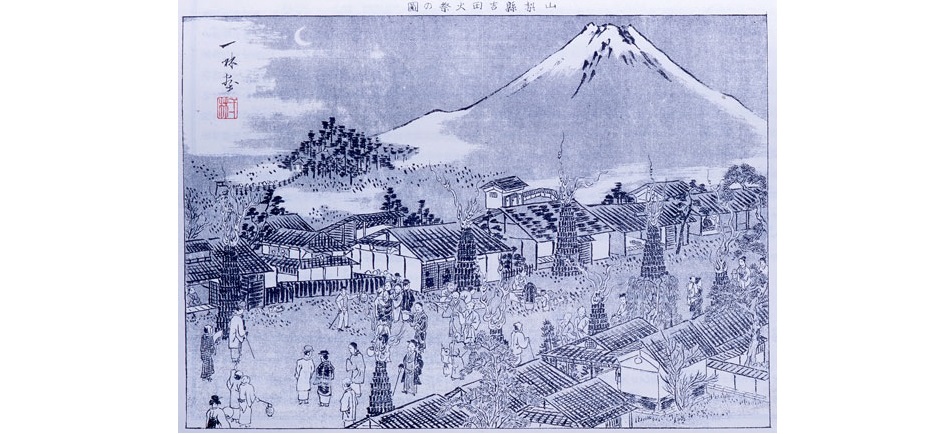
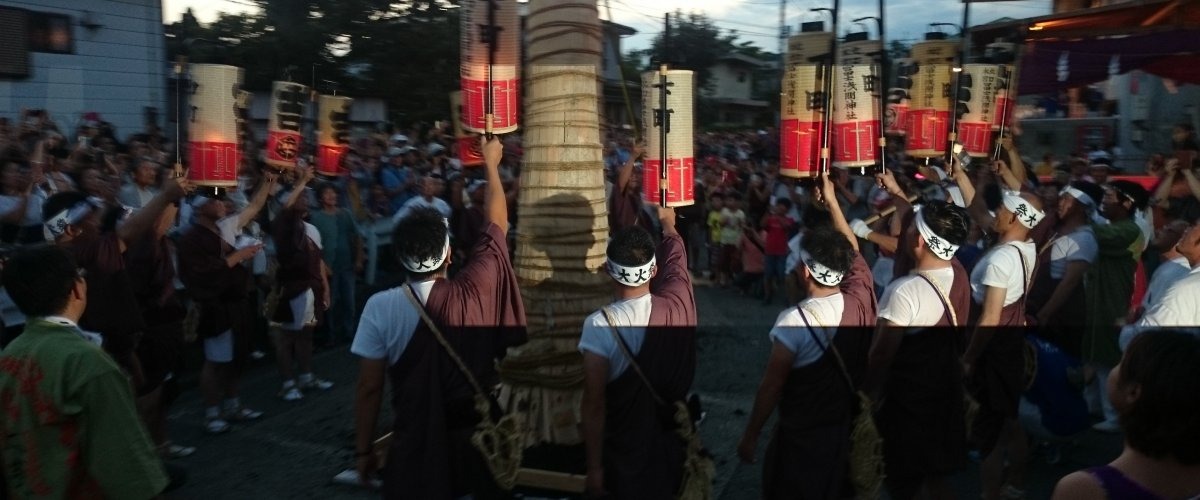
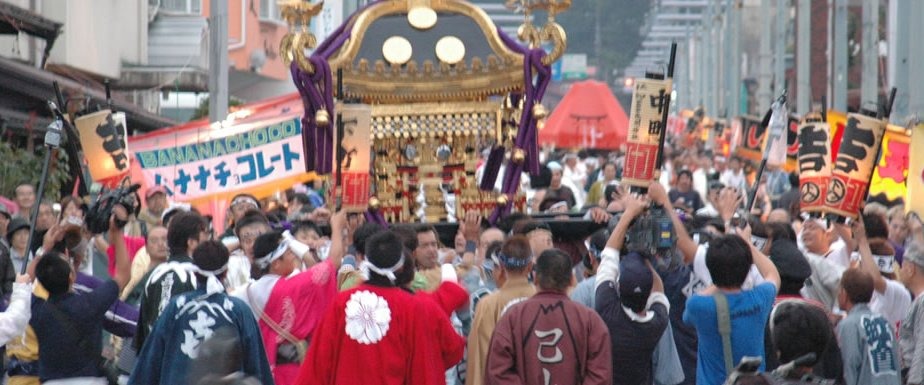
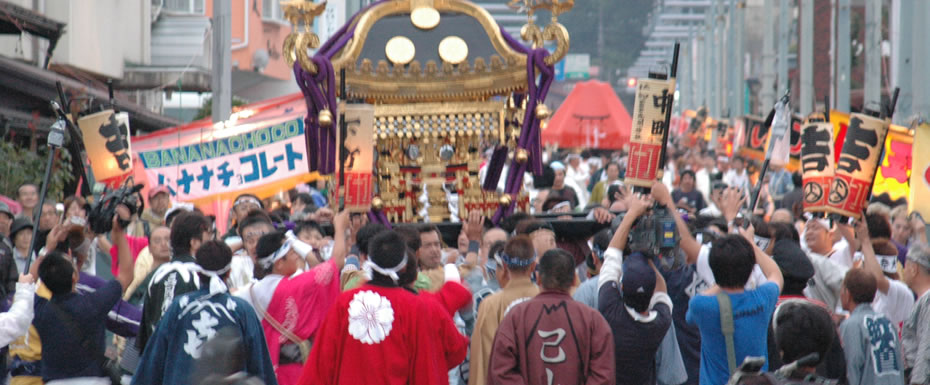
On the afternoon of the 26th, the main shrine festival and the Suwa Shrine festival were held, with the large portable shrine and sacred image being carried through the parishioners, who were bustling with worshippers. As dusk fell, the shrine was enshrined at the temporary shrine, and at the same time, more than 100 large torches, each shaped like a bamboo shoot and reaching a height of 3 meters, and torches piled up in a grid pattern at each house were lit simultaneously, dyeing the night sky red and raising the temperature of the town, as the festival continued into the late hours.

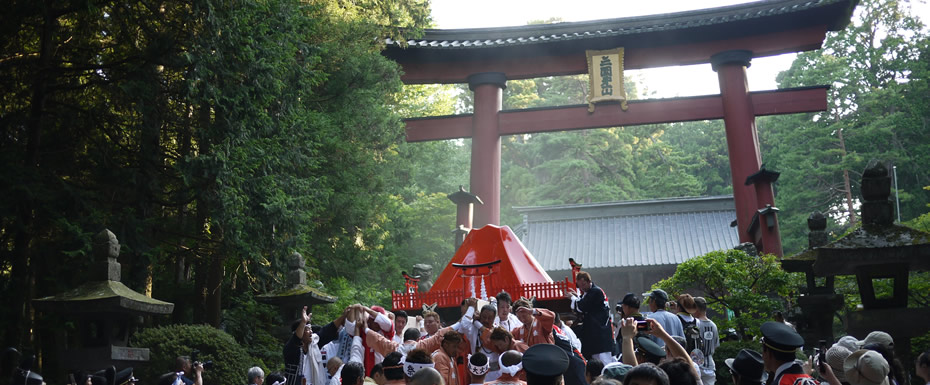
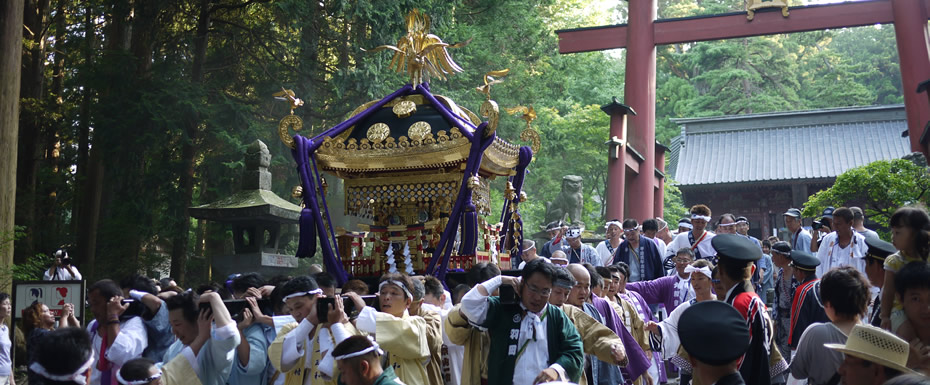
On the afternoon of the 27th, the two portable shrines are carried through the parishioners' area and return to Asama Shrine as dusk approaches. The festival reaches its climax when parishioners and worshippers, carrying "susuki tamagushi" (sacred branches of pampas grass), follow the two portable shrines around Takamagahara (the realm of the gods). The 27th is also known as the "Susuki Festival."

What is the Yoshida Fire Festival?

The "Yoshida Fire Festival" is a festival held annually on August 26th and 27th at both Kitaguchi Hongu Fuji Sengen Shrine and Suwa Shrine.

Originally, the Fire Festival was a festival of the Suwa Shrine, not the Asama Shrine. The "Kaikoku-shi" (History of Kai Province) states that "bonfires are lit throughout the town as part of the annual festival of the Suwa Myojin of Kamiyoshida Village on July 22nd," indicating that it is the tutelary deity of Kamiyoshida. The Fire Festival was a festival of the Suwa Shrine, centered around the Sato family, who were the chief priests of the Suwa Shrine, but it also indicates that it was a festival in which the priests and guides of the Asama Shrine should have been involved.

On the afternoon of the 26th, the Hondensai Suwa Shrine Festival is held, and the large portable shrine and sacred image descend the bustling approach to the shrine and onto the main street, circling the parishioners' neighborhood. As dusk falls, they are enshrined at the temporary shrine, and at the same time, more than 90 large torches, each 3 meters tall and shaped like bamboo shoots, and the torches piled up in a grid pattern at each house are lit simultaneously, dyeing the night sky red and raising the temperature of the town, as the festival continues late into the night.

Around 7 p.m. on the 27th, the two portable shrines are carried through the parishioners' area and return to Asama Shrine as dusk approaches. The festival reaches its climax when parishioners and worshippers, carrying "susuki tamagushi" (sacred branches of pampas grass), follow the two portable shrines around Takamagahara. The 27th is also known as the "Susuki Festival." The sight of the portable shrines and spectators moving together as one through the shrine grounds in the twilight is truly magnificent.
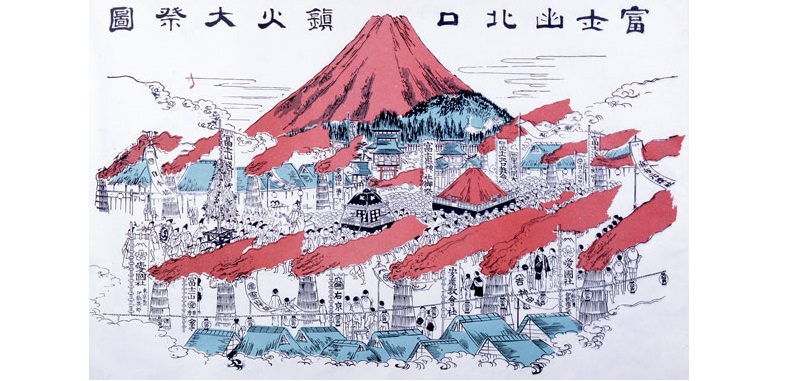
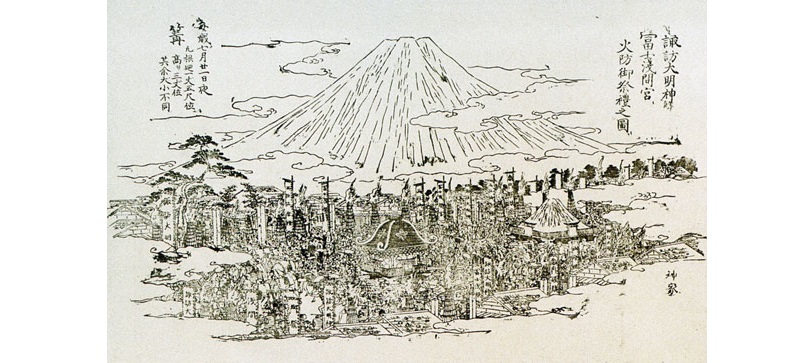
The origin of the fire festival

Records indicate that Suwa Shrine has existed for over 500 years. A document from 1572, called "Yoshida no Shinjukucho," which records the establishment of the new town of Kami-Yoshida, mentions the route through which the portable shrine was carried, suggesting that festivals were already being held there at least 400 years ago.

Furthermore, old records suggest that the Mt. Fuji-shaped portable shrine (Oyama Mikoshi) has been carried for over 400 years.

Legend of the Fire Festival

In the Kamiyoshida area and other regions, there are legends about the origin of the fire festival associated with Suwa Shrine.

At Suwa Grand Shrine in Nagano Prefecture, it is said that Suwa Myojin appears in the form of a snake, and there are also snake legends in Kamiyoshida. The portable shrine for the Fire Festival leaves the shrine and descends from Kamijuku to Shimojuku in Kamiyoshida, and it is said that a white snake god and a dragon descend from the top to the bottom of Kamiyoshida along with the portable shrine. For this reason, on the morning of the Fire Festival, the Oshi (religious guide) houses clean the river that flows through their property to welcome the snake god's passage. This is called "the descent of the white snake god." It is said that during the Fire Festival, the white snake descends the eastern river and the black snake ascends the western river, so it is said that one should not use or pollute the river during the festival.


Furthermore, there is a legend about the origin of the fire festival that involves Sainenji Temple, a Jishu sect temple in Kamiyoshida known as Fuji Dojo.

It is said that long ago, when a monk from Sainenji Temple went to Suwa in Shinano Province for ascetic training and returned home, he broke off a branch of a tree to make a dragon, enshrined it at Suwa Shrine, and then placed the dragon on the top of his staff and burned it, which is the origin of the fire festival. Another story tells of a wandering priest who, long ago, traveled from Suwa in Shinano Province to Yoshida, and Suwa Myojin followed him. However, the priest said, "Yoshida is a nice place," and left Suwa Myojin in what is now Suwa Forest before going to Fujisawa (Seijokoji Temple).


According to Shinto beliefs, the deity enshrined at Suwa Grand Shrine is Takeminakata-no-kami, and according to the first volume of the Kojiki, Takeminakata-no-kami, having lost a test of strength to determine the transfer of the land, was driven to Suwa Lake in Shinano Province. It is said that when Takeminakata-no-kami fought, he lit torches, and that this is the origin of the fire festival held in Kamiyoshida. This is described in Nakatani Takezo's "Reizan Fuji" from 1909, where it is said that when Takeminakata-no-kami, or Suwa-no-kami, was defeated in battle and fled to this place, he ordered the locals to light countless torches, which the attacking army mistook for reinforcements and left their siege. This is said to have happened on the night of July 21st.


On the other hand, a legend about the origin of the fire festival associated with Asama Shrine was recounted.

The Asama Shrine in Kamiyoshida enshrines Asama-no-kami, the deified form of Mount Fuji, but according to Shinto beliefs, the enshrined deity is Konohanasakuya-hime-no-mikoto.

In the myth of the first volume of the Kojiki, Konohanasakuya-hime, who became pregnant after a one-night stand with Ninigi-no-Mikoto, was doubted by him. To prove her innocence, she built a birthing hut with no entrance and plastered the walls with mud, then set it on fire and gave birth to three children amid the raging flames. For this reason, the divine virtues of the deity enshrined at Asama Shrine are said to include fire prevention, safe childbirth, protection from disasters, and protection of industry. Thus, the origin of the fire festival, according to Shinto theory, is said to be the burning of fire in homage to the story of Konohanasakuya-hime giving birth amid a raging fire. Currently, the most widely known origin legend is this one, which explains the relationship between the deity enshrined at Asama Shrine and the fire festival.

The evolution of fire festivals

Changes in the date of the fire festival

In 1872 (Meiji 5), the calendar system was revised, changing from the lunar calendar to the solar calendar. However, throughout the Meiji era, the fire festival was held on the 21st day of the 7th month of the lunar calendar, and the mountain closing ceremony was held on the 26th day of the 7th month of the lunar calendar.

According to an article in the Yamanashi Nichinichi Shimbun, the holiday dates at the time, converted to the Gregorian calendar, were September 1st in Meiji 18 (9), September 8th in Meiji 20 (9), and August 19th in Meiji 41 (8), all of which correspond to the 21st day of the 7th month in the lunar calendar.

In the solar calendar, this period corresponds to mid-August to early September, and the holiday dates varied each year.

Therefore, from the end of the Meiji era, there was a movement to shift to and standardize holiday dates according to the new calendar.

In 1910 (Meiji 43), the Fire Festival was held on August 21st and 22nd, a month later than the 21st day of the 7th month of the lunar calendar. In 1912 (Taisho 1), the shrine priests and parishioners' representatives agreed to hold the Fire Festival on September 9th and 10th of the new calendar, but they could not reach an agreement. In August 1913 (Taisho 2), it was decided that the Fire Festival would be held on August 30th and 31st of the new calendar, and the closing of the festival would be on September 10th.

However, because August 30th is the calculation day for municipalities, the number of worshippers would decrease, so in May of 1914, it was decided by consensus to return the fire festival to the 21st day of the 7th month of the lunar calendar.

However, in a meeting held shortly thereafter in August of the same year, it was decided that the fire festival would be held on August 26th and 27th.

In this way, the holiday date changed from the 21st day of the 7th month of the lunar calendar to the 26th day of the 8th month of the Gregorian calendar, and became fixed.